There is a moment in most good stories where something quite small happens and, at the time, it does not feel like a big deal. WISE started like that with a conversation in an office at British School Manila in 2022. Thea walked in and asked a simple question “How do we better support the women in our teams?”
That was it. No branding. No framework. No five year roadmap. Just recognition that something was missing.
International schools like to think of themselves as progressive spaces and in many ways they are. However, they are also transient, culturally layered environments where diversity brings opportunity but also complexity, with different expectations, norms and systems all colliding in one space.
Women were reporting feelings of isolation, misunderstanding and being stuck. Not because of a lack of talent or ambition, and not because of poor leadership, but because they were often working in male dominated spaces within systems shaped by particular forms of privilege.
Identifying the Missing Conversations
There was a missing piece. A lack of lived experience, awareness and training. Conversations about menopause, postpartum return, emotional labour, and navigating leadership as a woman were not fringe issues. They were daily realities, often experienced in isolation.
So a decision was made to build something new.
A small number of emails were sent to women in leadership asking if anyone would be willing to mentor a colleague. Every response was positive. Almost immediately, a follow up question came back “Can you help me too?” That moment marked the beginning of a shift.
Building a Global Mentorship Network
Within two terms, more than 200 women were matched across the world as mentor and mentee. Countries included Peru, Mexico, Cambodia, Singapore, Vietnam, Malaysia, the Netherlands, Australia and China. Everything was organised through spreadsheets, late nights, pizza, and a group of committed women working in parallel with their full time leadership roles.
Many were also balancing family life and further study. Work on WISE happened outside normal working hours, often in the evenings after children were asleep. There were no KPIs, no formal recognition, and no structural support to make space for it.
Yet the response from participants was significant. Emails from mentors, mentees, workshop attendees and conference delegates highlighted feelings of confidence, support and connection. Many described WISE as transformational, providing a sense of belonging they had not previously experienced.
From Mentorship to Movement
It quickly became clear that mentorship alone was not enough. Women were not only looking for guidance, but also for connection and for systems that recognised their needs.
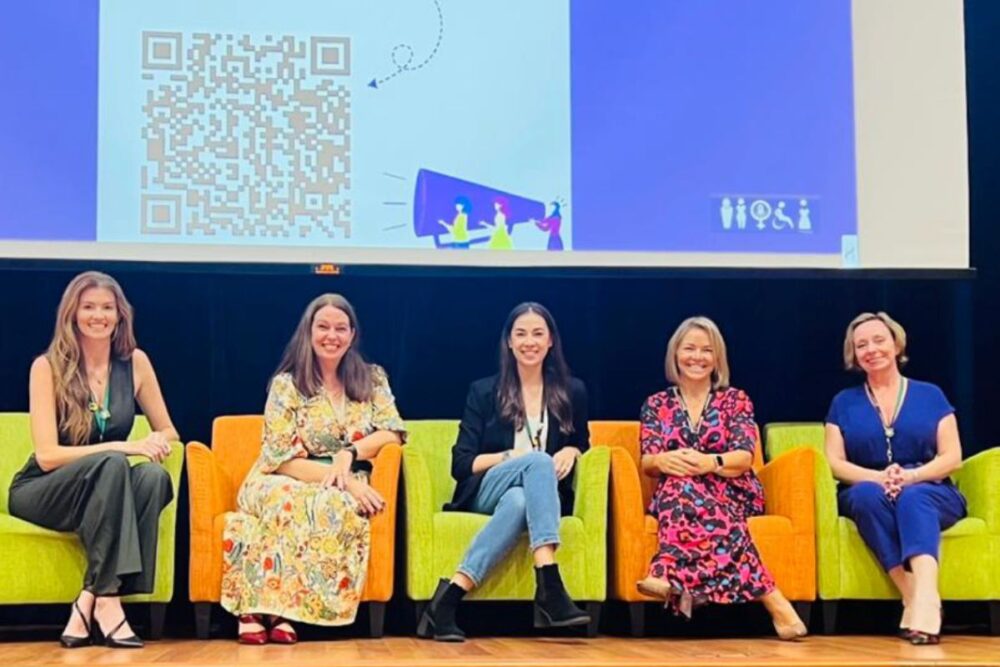
A major conference was held in 2024 in British School Manila with the support of Principal Martin van der Linde. Despite limited marketing, participants travelled from across the world, reflecting the resonance of the work.
A second conference followed in Seoul in 2025, further strengthening the network and expanding its reach.
Evolving the Structure of WISE
As the initiative grew, it became clear that the original model was no longer sustainable. In 2024, WISE Mentorship evolved into The Mentorship Hub as a separate business model designed to support structured mentoring.
WISE itself transitioned into a network and resource base guided by an advisory board model. Its focus shifted towards systems change, creating spaces for dialogue, storytelling and connection.
Since then, work has expanded into areas including menopause, return to work, barriers to physical activity and recruitment, addressing structural issues that impact equity in education.
A Community Led Future
With an advisory board of 12 women, WISE now operates as a sustainable, community led network. It is shaped by the collective contributions of those involved rather than a single founding voice.
Conferences continue to grow, a student network has emerged, and new projects are developing across different aspects of equity and inclusion in education.
WISE is now a shared space, built and carried by a wider community.