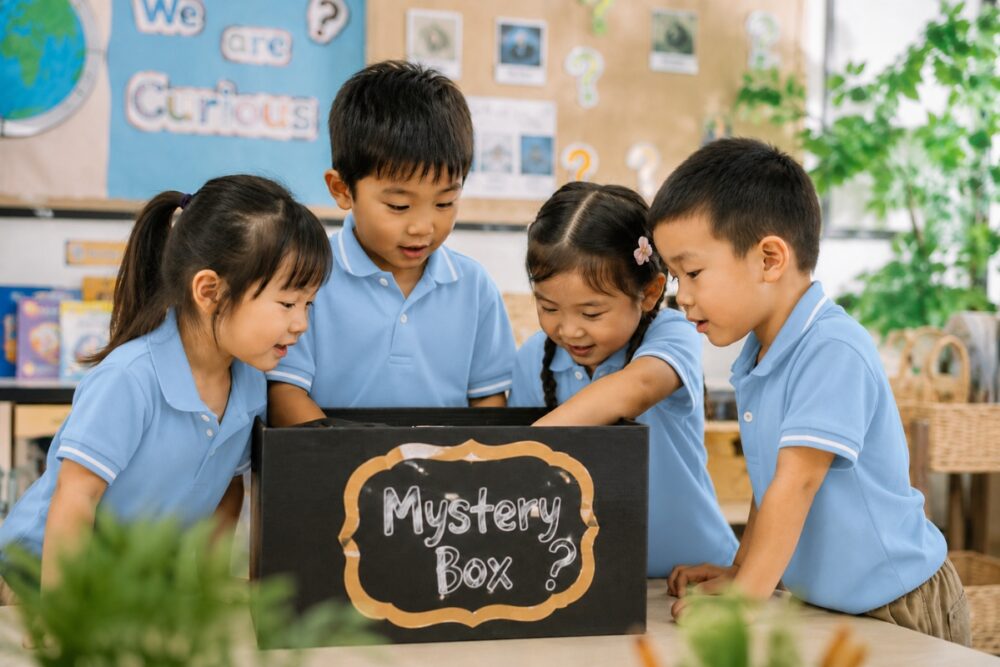
Curiosity sits at the heart of successful early years education. At Mill Hill International School Thailand, the school’s approach to EYFS curiosity learning encourages children to ask questions, investigate ideas and build confidence through meaningful, hands-on experiences.
One example is the school’s Mystery Box activity, where an unexpected delivery becomes the starting point for exploration, discussion and discovery. Rather than providing immediate answers, teachers encourage children to think critically, make predictions and work together to solve the mystery. This approach helps develop communication, problem solving and a genuine love of learning from an early age.
EYFS Curiosity Learning Encourages Children to Explore
The Early Years Foundation Stage places strong emphasis on learning through play, exploration and interaction. At Mill Hill International School Thailand, curiosity-led experiences are carefully planned to help children develop these essential skills while remaining fully engaged in their learning.
The Mystery Box activity demonstrates how a simple classroom experience can become a rich learning opportunity. Children are encouraged to observe, ask thoughtful questions, share ideas and test their thinking as they work together to uncover what is inside the box.
Why Curiosity Matters in the Early Years
Research consistently shows that curiosity supports language development, creativity and independent thinking. When children are encouraged to investigate their surroundings, they become more confident learners who are willing to take risks and explore new ideas.
Moreover, curiosity-led learning helps develop important life skills beyond academic knowledge. Children learn to collaborate, communicate their thinking and persevere when faced with unfamiliar challenges.
For parents, this approach provides reassurance that learning extends beyond traditional classroom activities. Instead, children build confidence through experiences that encourage imagination, resilience and a sense of wonder.
A British Approach to Early Years Education
Mill Hill International School Thailand follows the English Early Years Foundation Stage while combining it with the school’s Creative Curriculum. The programme encourages exploration, communication and holistic development through play-based learning, helping children establish strong foundations before progressing into primary education.
Additionally, the school places equal importance on character development alongside academic progress. Children are encouraged to become curious, compassionate and confident learners who enjoy discovering the world around them.
What Parents and Educators Can Learn
Activities such as the Mystery Box show that meaningful learning does not always require complex resources. Simple, open-ended experiences can encourage children to ask questions, develop vocabulary and strengthen their critical thinking.
For educators, the approach highlights the value of creating classroom moments that spark natural curiosity rather than simply delivering information. Meanwhile, parents can adopt similar ideas at home by encouraging children to explore everyday objects, predict outcomes and discuss their observations together.
Ultimately, Mill Hill International School Thailand demonstrates how curiosity can become the starting point for deeper learning, helping young children build the confidence and enthusiasm that will support them throughout their education.