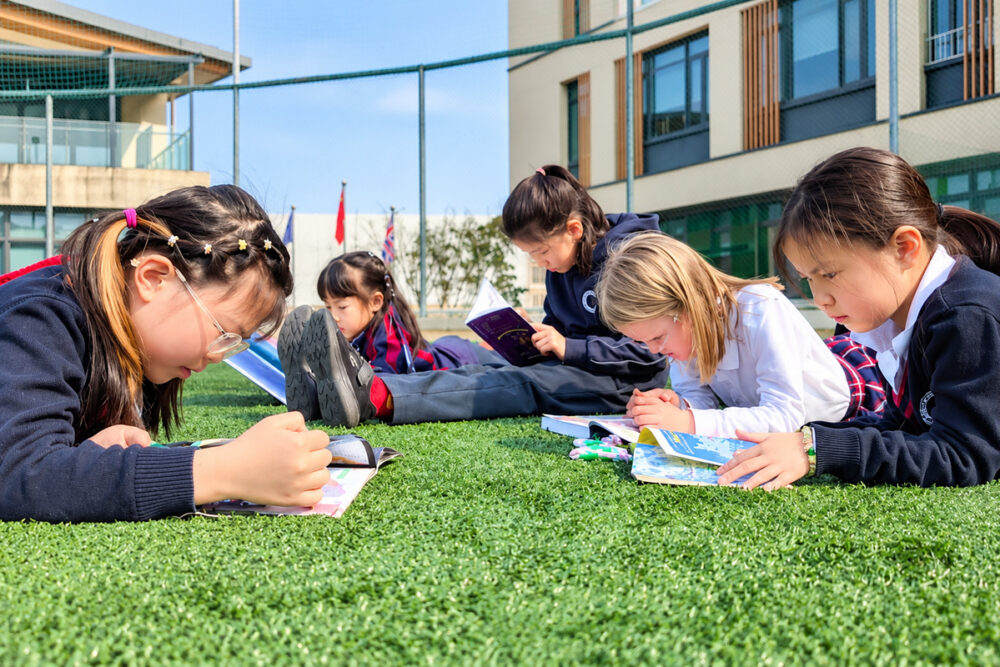

Outdoor play in Singapore is gaining attention as early years settings look at how children spend their time each day. KiddiWinkie Schoolhouse has introduced up to 90 minutes of outdoor play for preschool children every school day.
The initiative goes beyond the 30 minutes of daily outdoor time required under Singapore’s national regulations.
For parents and educators, the move raises a wider question. How much time should young children spend outdoors during their earliest years?
Research increasingly points to outdoor play as an important part of healthy childhood development. It can support attention, emotional regulation, working memory and other skills that children develop rapidly during the preschool years.
Why Outdoor Play In Singapore Matters
Singapore’s urban environment means many young children spend much of their time indoors. At the same time, screens, structured activities and busy family routines can reduce opportunities for free outdoor play.
Research suggests this matters during early childhood. The developing brain forms connections at an exceptionally rapid rate during the first years of life.
Outdoor play gives children opportunities to move, explore, make choices and respond to changing surroundings. These experiences can support executive function, including inhibitory control, working memory and cognitive flexibility.
These skills later help children manage emotions, follow instructions and solve problems.
Furthermore, outdoor experiences can support children’s wider mental health. Research involving more than 4,000 children found that those who played outdoors more often as preschoolers were more likely to maintain healthier mental health over time.
They also showed fewer symptoms linked to anxiety, depression and behavioural difficulties.
Children Are Spending Less Time Outdoors
The decline in outdoor play is not limited to Singapore.
Almost one in five Singaporean parents report that their preschool child spends less than an hour outdoors on a typical weekend day.
Similarly, a 2025 UK study found that more than a third of children did not play outdoors on school days.
These figures highlight a challenge for families and early years settings. Children may have fewer opportunities for spontaneous physical activity and exploration than previous generations.
For educators, outdoor play can therefore become more than a break between classroom activities. It can form an important part of the learning environment.
KiddiWinkie Introduces Up To 90 Minutes Outdoors
In January 2026, KiddiWinkie Schoolhouse introduced extended outdoor play of up to 90 minutes for every child each day.
The preschool says it is the first in Singapore to make this commitment across its early education programmes.
Singapore’s national regulations require full-day preschools to provide 30 minutes of outdoor time each day. KiddiWinkie’s approach aims to provide up to three times that amount.
Meanwhile, many preschools refer to “outdoor learning” or “time in nature”. Others use “no-screens” and “no-device” rules.
These approaches can support children’s wellbeing. However, the amount of outdoor time can vary depending on how each programme interprets its approach.
KiddiWinkie’s model sets a specific daily target instead.

What Children Can Gain From Outdoor Play
Outdoor play offers children opportunities that can be difficult to recreate indoors.
Children can run, climb, balance, observe nature and interact with different textures. They can also negotiate games with peers and make decisions about how they use the space.
These experiences can encourage physical development while also supporting social and cognitive skills.
Importantly, outdoor play does not always need to involve a structured lesson.
Child-led exploration allows children to decide what interests them. They can investigate objects, notice changes in their surroundings and develop their own games.
For educators, this creates opportunities to observe how children communicate, solve problems and manage challenges.
Nature-Based Learning Supports A Wider Approach
KiddiWinkie’s daily outdoor allocation forms part of its Sustainable Education™ framework.
The framework was developed by Babilou Family, the group’s parent organisation. Its third pillar, Nature-Based Learning, places outdoor experiences within the wider childcare programme.
KiddiWinkie also uses its Natural Rhythm® pedagogy. This approach focuses on each child’s developmental journey through sensory play, child-led exploration and care.
The emphasis is therefore not simply on spending more time outside. It is also about how children experience that time.
Outdoor play can become an opportunity to explore, communicate, move and develop independence.
What Parents Can Take From The Research
The initiative also offers useful lessons for families.
Parents do not need to recreate a preschool programme at home. However, they can look for simple opportunities to increase outdoor time.
A walk after school, play in a local park or time spent exploring nature can provide valuable experiences.
Moreover, outdoor time does not have to be highly structured. Children can benefit from having space to explore safely and choose their own activities.
Consistency can also help. Regular outdoor experiences may be more useful than occasional long outings.
For busy families, even small changes can therefore make a difference.
What Educators Can Consider
For early years educators, the focus on outdoor play raises questions about curriculum design and daily routines.
Schools and preschools can consider whether outdoor spaces are treated as extensions of the classroom. They can also examine how much time children have for free exploration.
Additionally, educators can observe what children learn through outdoor experiences.
A child who climbs, balances or navigates an obstacle is developing physical skills. A child who negotiates a game with classmates is also practising communication and social problem-solving.
Therefore, outdoor play can contribute to several areas of development at once.

Creating More Opportunities For Outdoor Play
KiddiWinkie’s 90-minute target highlights a broader issue for early childhood education in Singapore.
Children need opportunities to move, explore and experience the world around them. Outdoor play can support these needs while contributing to cognitive, emotional, physical and social development.
For parents, the message is not that every child needs a perfectly structured outdoor routine.
Instead, it is about recognising outdoor time as part of a healthy childhood.
For educators and school leaders, the initiative provides an opportunity to consider whether outdoor spaces and daily schedules give children enough time to explore.
Ultimately, the value of outdoor play lies not only in the minutes spent outside. It is also in what children are able to do, discover and experience during that time.