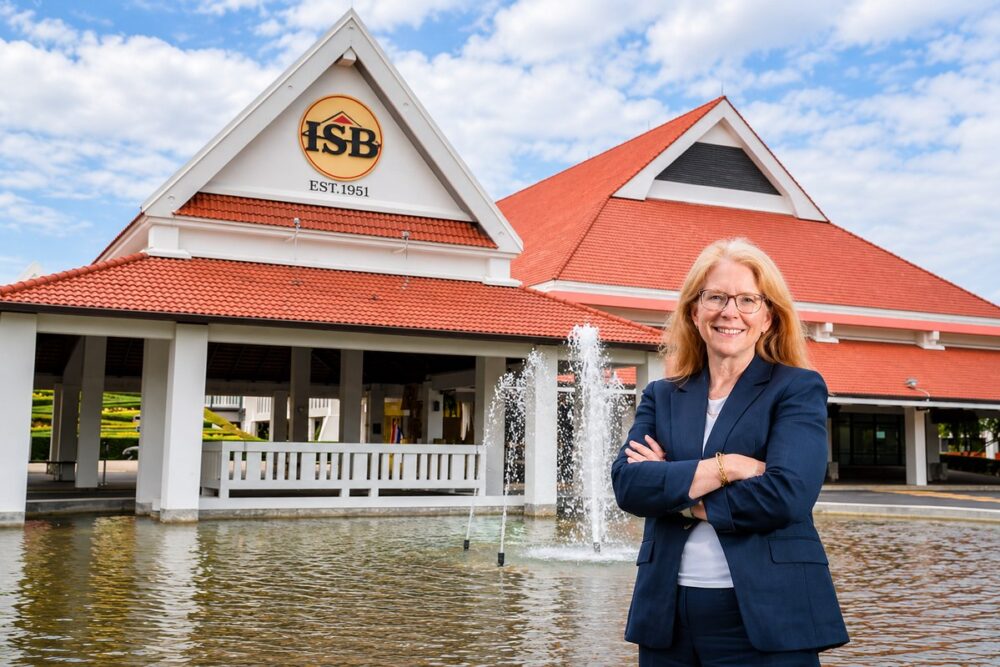
Dr. Daisy Pellant has begun her tenure as Head of School at International School Bangkok (ISB), bringing more than three decades of experience in international and independent education. Her approach places student development, relationships and understanding the school community at the centre of leadership.
Pellant took up the position on 1 August 2026, succeeding Dr. Sascha Heckmann. Her arrival comes as ISB celebrates its 75th anniversary and continues to serve families from more than 60 nationalities.
Rather than rushing into changes, Pellant has spent her first months observing how students learn, interact and build relationships with teachers. Her approach offers a reminder that effective school leadership involves understanding the everyday experiences of learners, not just monitoring academic results.
Daisy Pellant Prioritises Student Development
Pellant’s leadership philosophy draws on her academic background in developmental educational psychology and education leadership. She holds a doctorate in Developmental Educational Psychology, an Education Doctorate in Leadership and Learning from Vanderbilt University, and a master’s degree from Harvard’s Mind, Brain, and Education programme.
Before joining ISB, she spent more than six years leading The Kehillah School in California. Her wider career has included leadership roles in international and independent schools across the United States and other countries.
At ISB, Pellant has focused initially on understanding the school’s culture and relationships. She explained her approach to Scandasia, saying,
“To understand a school, I look for how students are interacting with each other, and I look for ways in which the adults in the community are interacting with each other and with our students.”
This emphasis on relationships matters to families and educators because students’ experiences extend beyond lessons and examinations. The way learners feel supported, challenged and included can influence how they participate in school life.
Helping Students Understand How They Learn
Pellant is particularly interested in helping students recognise themselves as learners. Rather than focusing only on memorising information or achieving grades, she wants young people to develop curiosity, confidence and ownership of their education.
During her early weeks at ISB, she spoke with students about how their learning had changed over time. One secondary student described becoming more confident and interested in thinking critically saying,
“I feel like as a learner I’ve developed to be more of a thinker and more passionate about learning. Not just, ‘I have to memorize this,’ but learning from passion. We don’t only have IB, and we don’t only have AP. We have so many options that I can pick one class from IB, one from AP, and make it my own pathway. I get to explore what I’m truly passionate about as a learner while also building the essential skills I need.”
These experiences highlight the value of giving students opportunities to make meaningful choices. When learners can explore their interests while developing essential skills, they have more scope to take responsibility for their progress.
Pellant has also referred to research on learning and achievement, stating,
“Research has shown that students who understand learning and understand themselves as learners, achieve more and go further in their education.”
For parents, this approach provides another way to think about progress. Academic achievement remains important, but so does helping children understand their strengths, ask questions and respond constructively to challenges.
Building A Strong School Community
Pellant’s early observations have also focused on the small interactions that shape school culture. At ISB’s annual Panther Run, she handed out bananas and chocolate milk to participants at the finish line.
One moment stood out to her. Reflecting on a tired middle school student who had completed the five-kilometre run, she recalled,
“A middle schooler has just run five kilometers and they’re exhausted and, yet, they made a point to say thank you, that sense of kindness and humility here is really beautiful.”
Pellant has also noticed how students connect across languages and cultures within the school’s international community. She said,
“There’s so much cultural competence here, where people are connecting across borders, languages, and perspectives. It’s a place where we all belong together.”
For an international school serving families from different backgrounds, these relationships are an important part of students’ daily experience. They can help young people develop empathy, communicate across differences and feel part of a wider community.
What Daisy Pellant’s Leadership Means For ISB
Founded in 1951, International School Bangkok offers education from Pre-Kindergarten to Grade 12. Its American-model curriculum includes International Baccalaureate (IB) and Advanced Placement (AP) pathways, alongside other academic options.
The school’s 75th anniversary marks a significant milestone. Meanwhile, Bangkok’s international education sector continues to attract new schools and greater competition for families.
ISB’s established history and broad curriculum provide important context for Pellant’s appointment. However, her immediate priority has been to understand the school’s existing strengths before deciding where changes may be needed. She explained why this matters saying,
“If I didn’t understand what the lived experience was like, I wouldn’t be able to make decisions that were thoughtful, It’s not just a learning journey. It’s a human development journey.”
For teachers and school leaders, this approach highlights the importance of listening to students and staff before making strategic decisions. For parents, it reinforces the value of a school environment that supports children’s academic progress alongside their personal development.
As Pellant continues her first year at ISB, the focus will be on how this understanding informs the school’s future direction while maintaining the relationships and opportunities that define its community.