Mainland schools offering the Hong Kong Diploma of Secondary Education (DSE) curriculum have outperformed the citywide average in this year’s university entrance examinations, highlighting a growing education pathway for Hong Kong families living across the Greater Bay Area.
The results are attracting attention from parents, educators and school leaders across Asia, including the UAE, where international qualifications and cross-border education opportunities continue to shape family decisions.
Mainland Schools Record Higher DSE Pass Rates
Four schools in mainland China are currently authorised by the Hong Kong Examinations and Assessment Authority to register students as school candidates for the DSE examinations. Students studying the curriculum at other mainland schools must enter the examinations as private candidates.
Following the release of this year’s results, two of the approved schools reported pass rates well above Hong Kong’s overall average.
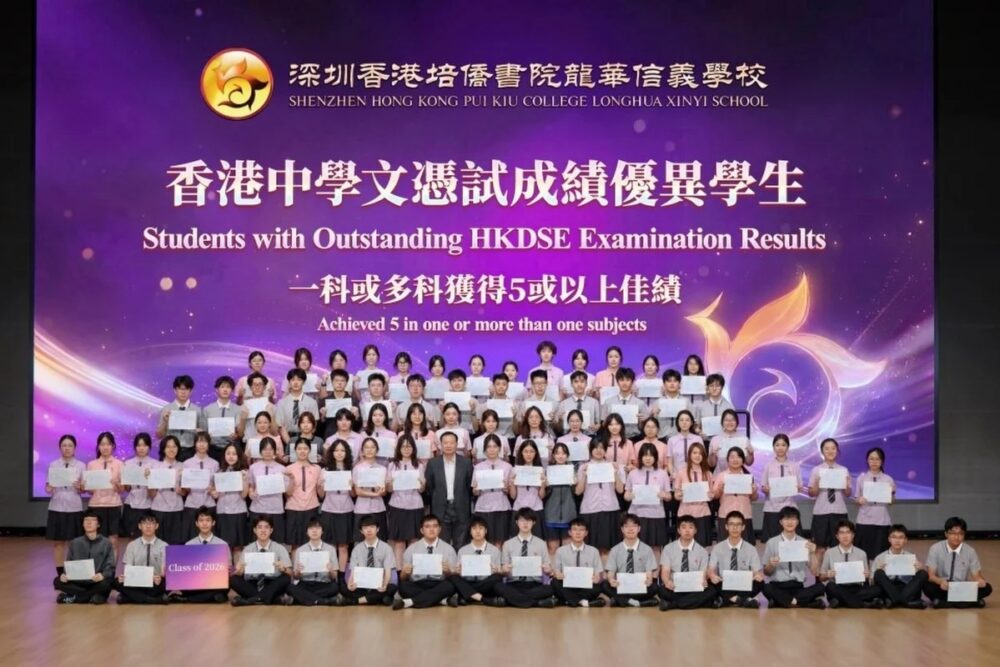
Shenzhen Hong Kong Pui Kiu College Longhua Xinyi School announced that 87 per cent of its students achieved the required results in all core subjects. Meanwhile, the Affiliated School of JNU for Hong Kong and Macau Students (ASJNU) in Guangzhou reported a 71 per cent pass rate.
By comparison, 42.7 per cent of more than 43,000 day-school candidates across Hong Kong met the core subject benchmark.
Students are required to achieve at least Level 3 in Chinese and English, Level 2 in mathematics and an “attained” grade in citizenship and social development. In addition, they must secure Level 3 or above in two elective subjects to qualify for admission to Hong Kong’s eight publicly funded universities.
This year, the proportion of day-school candidates meeting the minimum university entrance requirements fell slightly from 38.5 per cent in 2025 to 36.8 per cent.
Growing Interest in Greater Bay Area Education
The strong results reinforce the growing appeal of Greater Bay Area schools for Hong Kong families seeking continuity in education while living on the mainland.
ASJNU’s Dongguan campus reported that all graduates achieved results meeting undergraduate admission requirements across mainland China, Hong Kong, Macau and Taiwan, although it did not publish its DSE pass rate.
Similarly, Minxin Hong Kong School in Guangzhou stated that more than 90 per cent of its students achieved results meeting university entrance requirements in general.
Student Chooses Mainland School During Pandemic
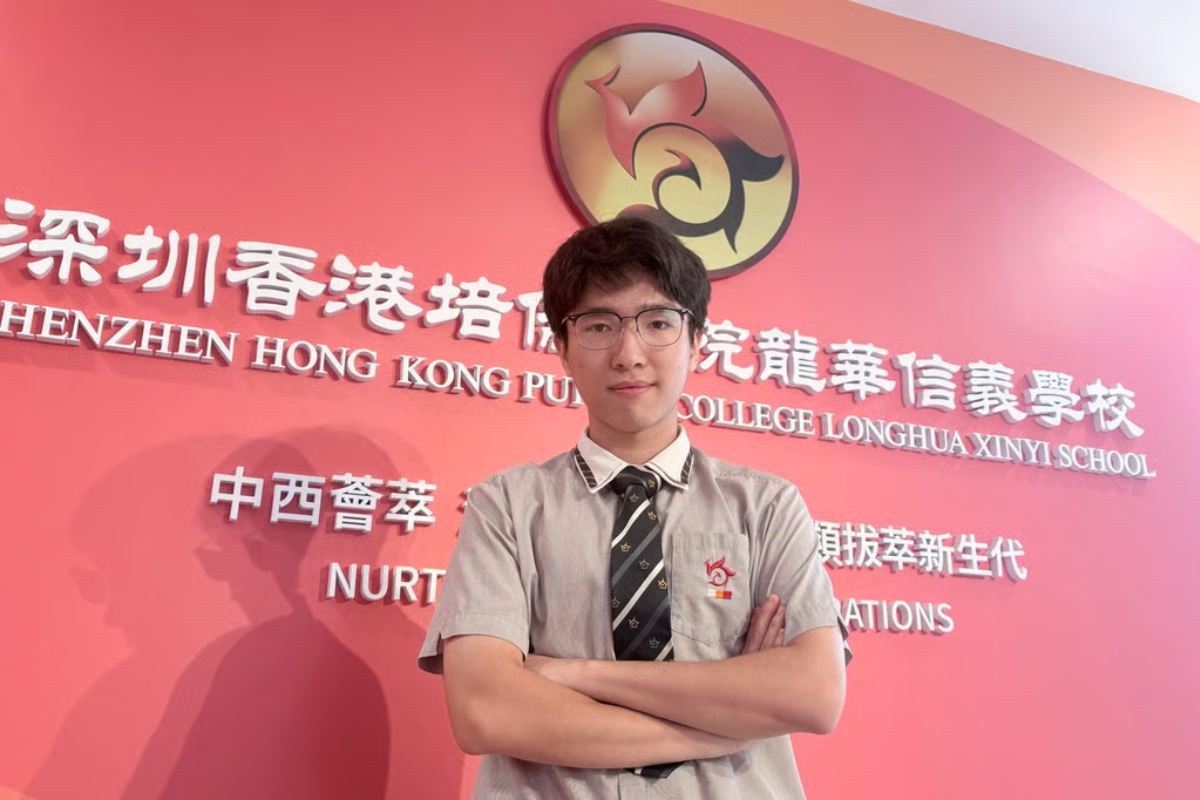
Among the successful students was 18-year-old Aaron Pei Kai-chun from Shenzhen Hong Kong Pui Kiu College Longhua Xinyi School.
He achieved Level 5 in most of the six subjects he completed and hopes to join the University of Hong Kong’s science master class programme, which enables students to complete both a Bachelor of Science and a Master of Research within four and a half to five years.
Explaining his decision to study across the border Pei said,
“Studying in Hong Kong [during the pandemic] would have meant moving there, which felt too difficult for my family and me, and it was a bit hard to get used to that kind of arrangement.”
He later discovered that Pui Kiu College had established a mainland campus.
International University Choices Remain Strong
Another high-achieving student, Nicole Li Peizhen from Minxin Hong Kong School, earned Level 5* or above in all seven of her subjects.
She also received an admission offer from University College London. However, she has chosen to pursue medicine in Hong Kong.
“I think Hong Kong is a very good international platform. I can access a lot of international information here without necessarily studying abroad, and I also feel more comfortable in Hong Kong.”
Her decision reflects a wider trend among many high-performing students who value Hong Kong’s combination of international education and proximity to home.
Schools Offer Additional Academic Support
Meanwhile, Minxin Hong Kong School attributes part of its success to targeted academic support.
Principal Halina Poon Suk-han noted that the school provides free tutoring services for students who need extra help in weaker subjects.
Students are also able to arrange after-school tutoring sessions with teachers, giving them additional opportunities to strengthen their performance before examinations.