
Kazakhstan is rapidly becoming one of the world’s fastest-growing destinations for international higher education. Over the past five years, leading universities from the United Kingdom, Europe, North America and Asia have established campuses, joint institutes and degree partnerships across the country.
For students, this means greater access to internationally recognised qualifications without leaving the region. For educators and university leaders, it highlights a changing model of global higher education, where universities increasingly bring their programmes to students rather than expecting students to study abroad.
Kazakhstan’s Higher Education Strategy Is Gathering Pace
Kazakhstan’s effort to attract foreign universities has expanded well beyond an initial pilot programme. By July 2026, the government had established partnerships with 40 international institutions and opened 32 foreign university branches. Around 12,000 students are enrolled across these institutions, supported by approximately 1,500 academics, including 500 international professors.
The expansion has accelerated since 2021, with universities from Europe, North America, Russia, China and South Korea launching campuses or academic partnerships across the country.
Rather than simply increasing the number of institutions, Kazakhstan is introducing internationally recognised degrees, teaching approaches and university brands while encouraging more domestic students to study locally.
Meanwhile, the country’s international student population reached 35,075 learners from 88 countries in 2025, representing an 11 per cent increase from the previous year.
Universities Are Taking Education to Students
Global higher education is changing. Traditionally, students travelled abroad to study at universities in countries such as the United Kingdom, Australia, Canada and the United States. Today, universities are increasingly establishing campuses closer to where students already live.
UNESCO estimates that 7.3 million of the world’s 269 million higher education students now study outside their home country, compared with around two million in 2000.
However, rising demand has placed pressure on housing, immigration systems and university capacity in many popular study destinations.
Additionally, the OECD reported in April 2026 that several leading host countries have reviewed visa and admissions policies as they assess the long-term impact of international student growth.
For universities, overseas campuses provide another route to expansion while reducing the financial barriers many students face.
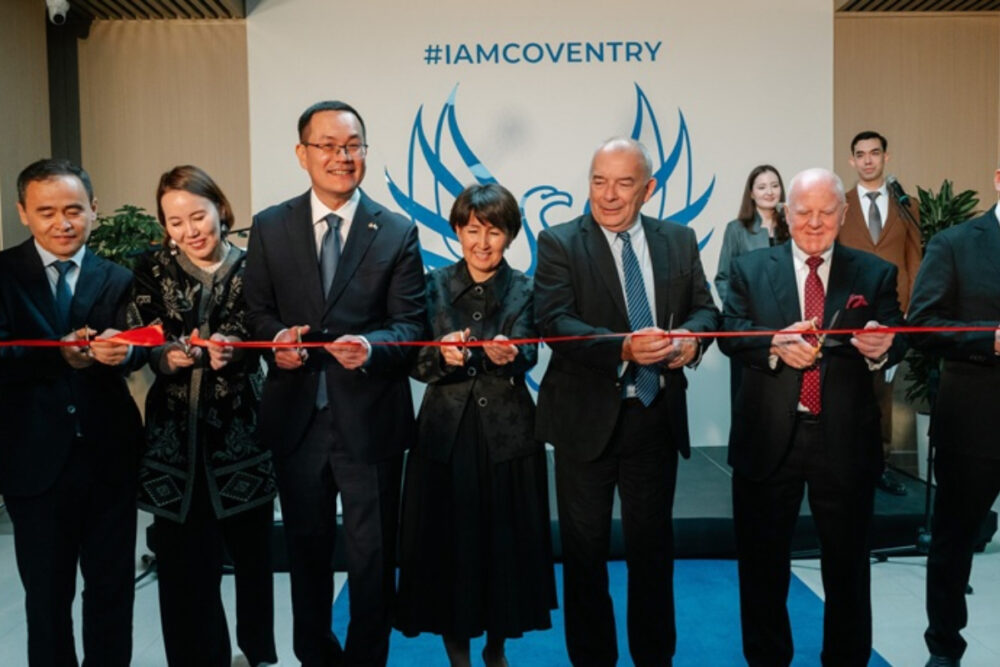
Coventry University summarised this approach when announcing its second Kazakhstan campus in June. Vice-chancellor John Latham said,
“It is harder for students to come to the UK, so we are taking quality UK higher education to them.”
Not every overseas campus operates in the same way. Some institutions manage fully branded campuses, while others deliver programmes through local university partners. Consequently, maintaining consistent academic quality remains essential.
Why Kazakhstan Is Attracting International Universities
Kazakhstan offers universities access to both a large domestic market and a growing regional student population. At the start of the 2025 to 2026 academic year, the country enrolled more than 678,000 higher education students, including over 208,000 new entrants.
Its international student community is also expanding. India contributed 9,959 students in 2025, followed by Turkmenistan with 9,089, Uzbekistan with 4,136, China with 3,367 and Russia with 2,426. More than half of all international students study in Almaty, while Astana and Shymkent have also become major education centres.
Medicine remains the most popular subject for international students, attracting almost 13,000 learners. Business, law, engineering, information technology and teacher education also continue to grow.
Additionally, Kazakhstan already has established universities, laboratories and experienced academic staff, allowing foreign institutions to build partnerships rather than creating entirely new campuses. The government has also aligned many partnerships with national workforce priorities, including engineering, mining, energy, agriculture, artificial intelligence and information technology.
Furthermore, Kazakhstan’s central location allows universities to recruit students from Central Asia, South Asia and neighbouring countries while offering lower living costs than many Western destinations.
Three Models of International University Partnerships
Foreign universities are entering Kazakhstan through three main partnership models.
Dual Degree Partnerships
The first model involves dual degree programmes with existing Kazakh universities. The University of Arizona works with Kozybayev University in Petropavl, allowing students to graduate with qualifications from both institutions. Students complete one semester in Tucson while studying alongside academics from both universities.
In August 2025, the first group of 29 Kozybayev students travelled to Arizona through a government-funded programme covering tuition fees, accommodation, visas and travel costs.
Similarly, Heriot-Watt University partners with K. Zhubanov Aktobe Regional University to deliver double degree programmes in engineering, computational science and software engineering while supporting research and academic exchanges.
International Branch Campuses
The second model involves fully branded international campuses. Coventry University opened its first Astana campus in 2024 and will launch a second campus in Almaty in September 2026. Initial programmes include business, computing, engineering, international relations, and art and design.
Meanwhile, Cardiff University opened its Astana campus in September 2025. Undergraduate programmes in business management, civil engineering, computer science and exploration geology are expected to begin from September 2026, alongside a master’s degree in artificial intelligence and data science.
Specialist Regional Partnerships
The third model focuses on specialist education linked to regional industries. Woosong University established a campus in Turkestan specialising in artificial intelligence and big data. Italy’s Marche Polytechnic University has introduced agricultural programmes in Taldykorgan.
Further developments are already planned. Grenoble INP-Phelma is preparing programmes in nuclear and renewable energy with Satbayev University in Almaty, while the Colorado School of Mines plans a campus in Zhezkazgan to support Kazakhstan’s mining sector.
Although these initiatives are often grouped together, they offer different student experiences depending on the level of involvement from the parent university, the degree awarded and the amount of international teaching provided.
Can Higher Education Become an Export Industry?
Kazakhstan’s strategy has two clear economic goals. First, it aims to reduce the number of students leaving the country for higher education. More than 90,000 Kazakh students are estimated to be studying overseas, representing significant spending on tuition and living costs abroad.
Second, the country hopes to attract more international students whose spending supports local economies through accommodation, transport, healthcare and everyday living.
Almaty already hosts more than 18,000 international students, creating an education economy that extends well beyond university fees.
Regional cities could also benefit. New partnerships have already brought investment in laboratories, student accommodation and specialist teaching facilities in Petropavl, Aktobe, Turkestan, Taldykorgan and Zhezkazgan.
However, the long-term success of the strategy will depend on outcomes rather than expansion alone.
Success Will Depend on Quality
Opening more campuses is only the beginning. The real measure of success will be graduate employment, research output, teaching quality and meaningful collaboration with industry.
Foreign university brands alone cannot transform higher education. Successful partnerships should strengthen research, develop local academic talent, improve laboratories and create stronger links with employers.
Kazakhstan has already persuaded several internationally recognised universities to invest in cities that previously attracted little global attention.
Ultimately, if these partnerships deliver high-quality degrees, valuable research and skilled graduates, higher education could become an important export industry for Kazakhstan and strengthen its position as an education hub for Central Asia.