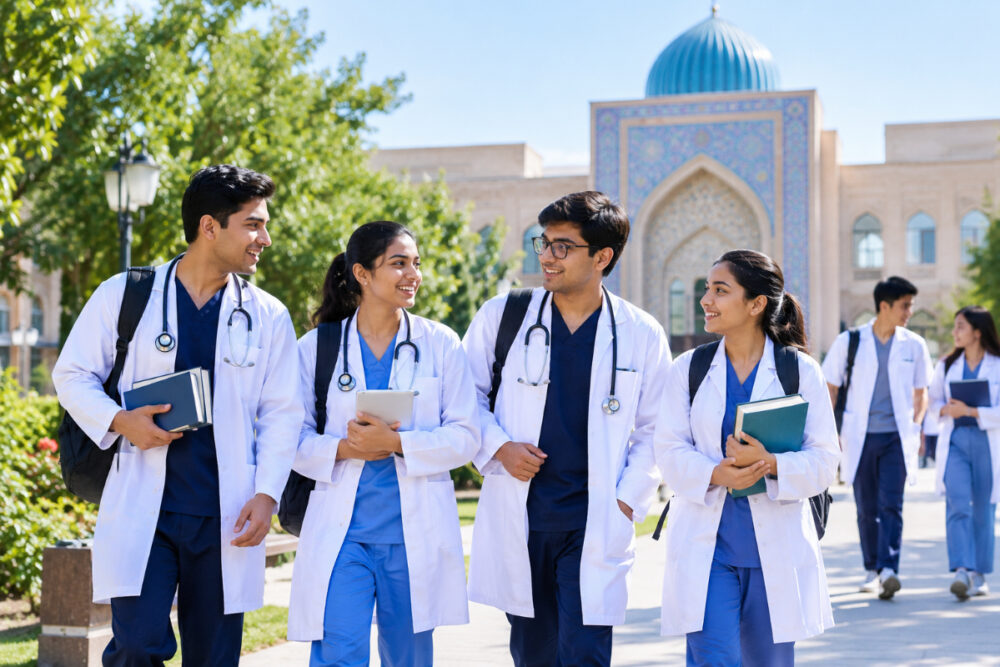
South Korea is changing how it approaches international students, moving from rapid growth in enrolment towards education quality, student protection and graduate employment.
The shift follows the country reaching more than 300,000 international students ahead of its original 2027 target. Ministry data shows that 307,464 international students were studying in South Korea in 2026, compared with about 182,000 in 2023.
The government had set the 300,000 target through its Study Korea 300K Project. Now, the focus is turning towards what happens after students arrive.
For prospective students and their families, this means greater attention to the quality of universities, recruitment practices, academic support and opportunities after graduation.
The Ministry of Education announced the new strategy on September 8. It aims to attract talented international students while strengthening their protection and helping more graduates build careers in South Korea.
International Students To Receive Stronger Protection
The new approach responds to concerns about how some international students are recruited and supported.
The ministry said students can be vulnerable to misleading advertising by recruitment agencies, weak academic management and inadequate educational provision at some institutions.
It also highlighted cases involving students who were unable to enrol after their visas were rejected but did not receive timely tuition refunds.
This is an important issue for families considering overseas study. Clear information about fees, admission conditions and refund policies can make the decision to study abroad more transparent.
The ministry plans to introduce a standard agreement between universities and recruitment agencies in October.
The agreement will require universities and agencies to provide accurate information about academic programmes, qualifications and conditions for working while studying.
It will also prohibit misleading or exaggerated advertising.
Students must also receive information about tuition refund procedures before enrolment. If admission is cancelled because a visa is denied, universities would be required to refund tuition directly to an account in the student’s name.
Furthermore, universities will have greater responsibility for monitoring the recruitment agencies they use.
The government plans to pursue amendments to the Higher Education Act later this year. These changes would provide a stronger legal basis for the new requirements and allow corrective action when rules are breached.
South Korea To Raise Standards For International Students
The government is also planning a major review of its International Education Quality Assurance System, known as IEQAS.
The system assesses universities on their ability to recruit, educate and support international students. Its results are also linked to visa screening.
Currently, universities must meet one mandatory indicator and choose six of nine additional indicators when seeking certification.
From the fifth certification cycle, covering 2029 to 2032, more indicators linked directly to international student education and management will become mandatory.
The government also plans to raise the required proportion of international students who meet recognised Korean or English language proficiency standards.
The target will increase from 40 percent in 2026 to 60 percent by 2030.
Importantly, the assessment of academic and student-life support will also change. Instead of simply checking whether support programmes exist, evaluations will increasingly consider their quality.
Universities that lack basic educational conditions could face tighter restrictions on recruiting international students.
Institutions that fail institutional accreditation, as well as private universities classified as financially distressed for two consecutive years, could be placed in the lowest IEQAS category.
That could restrict visa issuance for newly admitted international students.
For applicants, the changes underline the importance of looking beyond rankings when choosing a university. Students will increasingly need to consider academic support, student services, language provision and institutional stability.
From International Students To Graduate Employment
South Korea’s new policy also tackles one of the biggest challenges facing international graduates.
The country has successfully increased international student numbers. However, fewer graduates have moved into employment in South Korea.
Of 14,966 international graduates classified as eligible for employment in 2024, 4,993 found jobs in the country. That represented an employment rate of 33.4 percent, up from 21.7 percent a year earlier.
The gap was particularly noticeable among Global Korea Scholarship recipients.
Although 83.8 percent said they intended to work in South Korea, only 28.3 percent had secured employment.
As a result, the government wants universities to provide stronger support before students graduate.
From 2027, the government plans to publish guidance covering recruitment processes, occupations and workplace culture in South Korea.
The Study in Korea platform will also provide more personalised employment information. Job listings will be matched with students’ preferred fields and regions.
This could make the transition from university to employment easier for international graduates who want to remain in the country.
Regional Jobs Could Shape Future Study Choices
Another priority is connecting international students with employment opportunities outside Seoul.
More than 60 percent of international students who intended to work in South Korea preferred jobs in Seoul, according to government data from 2025.
However, many regional industries face labour shortages.
The government therefore plans to strengthen links between universities, students and regional employers.
From 2027, it will introduce a certification programme for academic departments that demonstrate strong results in educating international talent.
Departments with high-quality curricula linked to regional industries and a record of helping international students find jobs and settle locally could receive government funding and additional scholarship allocations.
For universities, this creates an incentive to build stronger relationships with local employers.
For students, it could also broaden the range of career opportunities available after graduation.
Greater Support For STEM And Research Students
South Korea is also placing greater emphasis on international students in science and engineering.
The government plans to increase the proportion of science and engineering students among graduate-level Global Korea Scholarship recipients from 43 percent this year to 45 percent in 2027.
Outstanding master’s students will receive additional support to continue into doctoral study.
Students with strong research records could also receive further incentives. The government is considering preferential visa treatment for high-performing science and engineering scholarship recipients in cooperation with the Justice Ministry.
Meanwhile, universities and education internationalisation zones will be encouraged to create more opportunities for international students to connect with local communities.
A 24-hour artificial intelligence chatbot will also provide counselling in students’ native languages. Students needing further assistance will be connected with professional counsellors.
These measures reflect a broader change in South Korea’s approach.
The Study Korea 300K Project was originally designed to increase international enrolment while strengthening pathways from recruitment to study and employment. The latest strategy takes that approach further by placing greater emphasis on educational quality, career outcomes and long-term settlement.
What The Policy Shift Means For Students
South Korea’s experience offers an important lesson for universities across Asia.
Increasing international student numbers can strengthen campuses and create new cultural and academic connections. However, growth also brings greater responsibility for institutions to provide reliable information, good teaching, effective support and realistic career pathways.
For students and parents, the policy shift means university choice may increasingly involve questions beyond fees and rankings. Education Minister Choi Kyo-jin said,
“We will now focus on attracting and fostering outstanding talent so that international students can use their studies and experiences in Korea to play active roles both in our society and around the world.”
Students will need to consider the quality of academic programmes, support services, employment opportunities and the university’s relationship with local industries.
For universities, meanwhile, attracting international students is becoming only one part of the equation.
The greater challenge will be helping those students succeed during their studies and after graduation.