
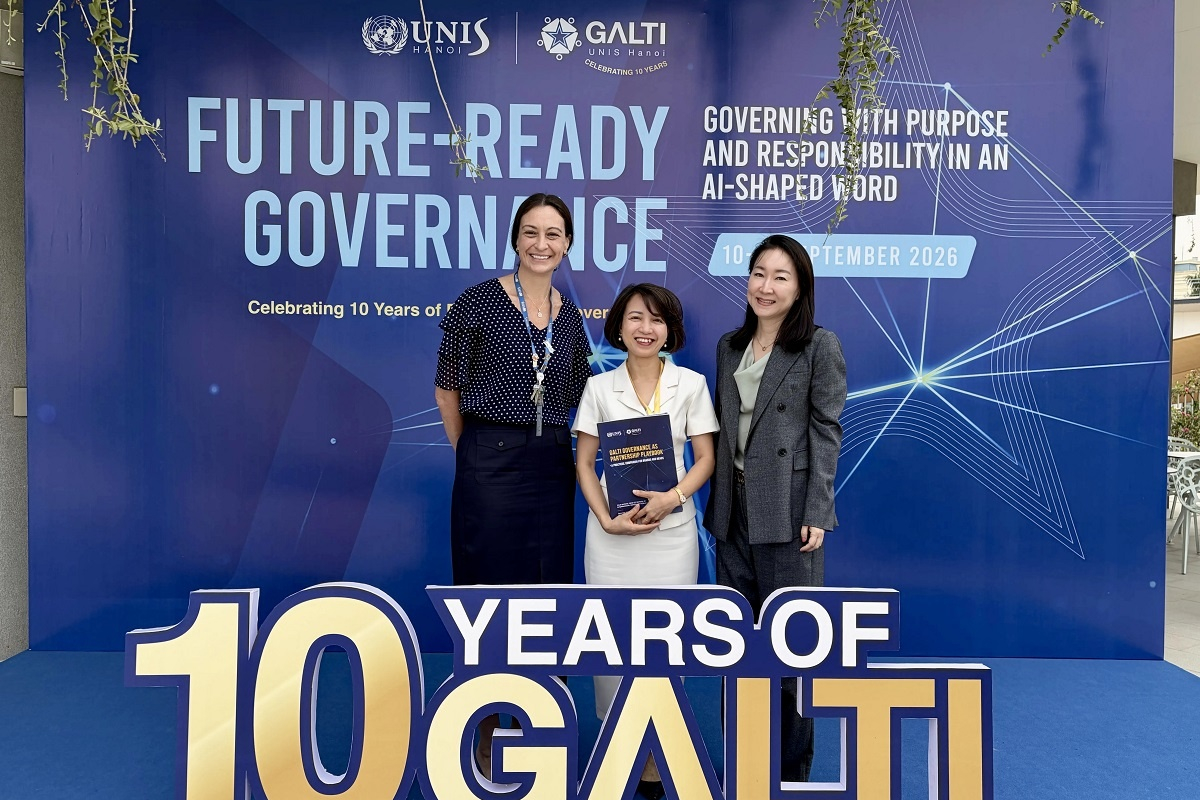
GALTI 2026 brought education leaders from across Asia to Hanoi to explore responsible school governance in an AI-shaped education landscape.
Heads of school and board chairs from international schools across the region gathered at United Nations International School of Hanoi (UNIS Hanoi) from September 10 to 12.
The three-day Governance as Leadership Training Institute welcomed leaders from Beijing, Guangzhou, Hong Kong, Kuala Lumpur, Seoul, Singapore and Taipei.
The programme gave school leaders an opportunity to examine how boards and senior leadership teams can make responsible decisions while responding to changes in technology and education.
GALTI 2026 Focuses On Responsible School Governance
GALTI 2026 marks the tenth anniversary of the Governance as Leadership Training Institute.
This year’s theme, “Future-ready governance: Governing with purpose and responsibility in an AI-shaped world”, placed artificial intelligence at the centre of discussions about school leadership.
For schools, the growth of AI raises questions that extend beyond technology itself. Leaders must also consider student wellbeing, academic integrity, equity and the role of human relationships in education.
The Institute therefore focused on how governing boards and school leaders can approach these issues through purposeful decision-making and responsible governance.
Hanoi Creates A Regional Education Dialogue
The participation of Vietnamese education leaders added a local dimension to the regional gathering.
Education authorities and international school leaders had an opportunity to exchange perspectives on education and governance. Meanwhile, the event highlighted Hanoi’s growing role as a meeting point for education professionals from across Asia. Dr Liz Gale, head of school at UNIS Hanoi said,
“Education leaders from across the region will see in Hanoi what our community sees every day: Vietnam is not simply responding to the future of education; it is helping to shape it. Governance in an AI-shaped world is not a challenge that any one school can address alone. We are proud to bring boards and heads together at UNIS Hanoi to learn from one another and consider how schools can use emerging technologies responsibly, ethically, and in the best interests of students.”
The discussions are particularly relevant for school communities as AI becomes increasingly present in learning, assessment and administrative work.
Students Add Their Perspectives On AI In Education
Students also took part in the opening of GALTI 2026.
Student representatives welcomed delegates and led campus tours at UNIS Hanoi. They also shared their views on how artificial intelligence is influencing their learning and their hopes for the future of education.
Their involvement brought the discussion back to the people most directly affected by school governance decisions.
For educators and school leaders, student perspectives can provide useful context when considering how policies around emerging technologies affect learning and everyday school life.
GALTI 2026 Moves Beyond Traditional Conference Discussions
GALTI is structured as a working institute rather than a traditional conference.
Participants take part in keynote discussions, practical workshops and scenario-based sessions. These activities examine areas including responsible AI governance, crisis leadership, head and board partnerships, strategic decision-making and effective governance practices. Rami Madani, head of school at the International School of Kuala Lumpur and facilitator of GALTI 2026 said,
“Decisions made at the governance level shape the future of a school. Bringing boards and heads from across Asia together at UNIS Hanoi allows us to examine difficult questions openly, learn from one another and strengthen education across the region.”
The practical focus means participants can take resources back to their schools. These include governance frameworks, board agendas, leadership dashboards, professional development plans and partnership agreements.
Building Stronger School Leadership Across Asia
The Institute also has a wider education impact beyond its three-day programme.
Since 2020, GALTI has supported local educational development through the UNIS Hanoi Learning Together Fund. Contributions generated through the Institute support Learning Together Vietnam, an annual not-for-profit education conference.
The conference brings together Vietnamese and international educators working from Early Years to Grade 12. It provides opportunities to exchange classroom practices and collaborate on education across Vietnam.
This connection between regional leadership and local professional development gives GALTI a broader role within the education community.
Why Responsible Governance Matters For Schools
School governance decisions can influence technology policies, student support, academic standards and strategic priorities.
As a result, governance has a direct connection to the experiences of students and educators.
GALTI 2026 provides a forum for leaders to consider these responsibilities collectively. It also creates opportunities for schools across Asia to share experiences rather than addressing common challenges in isolation.
By hosting the Institute, UNIS Hanoi continues its role in connecting Vietnam’s education community with international schools across the region.
For school leaders, educators and education stakeholders, the gathering highlights the growing importance of thoughtful governance as schools respond to the opportunities and challenges associated with artificial intelligence.