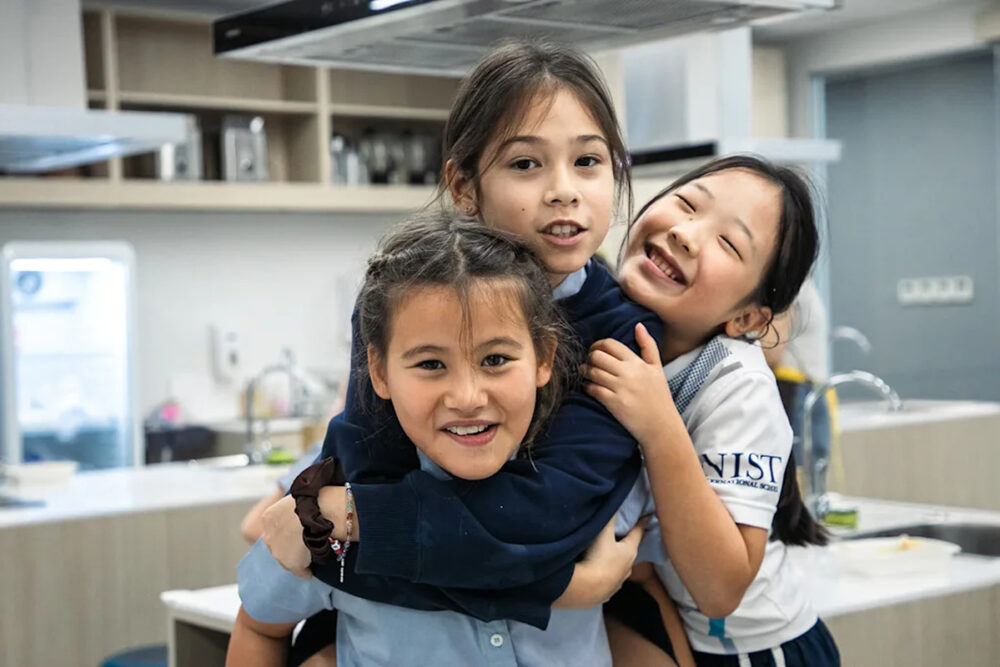

As new students enter the American International School of Guangzhou (AISG) each August, they arrive with a mix of excitement and uncertainty. Returning students reconnect with friends, while new classmates begin finding their place in an unfamiliar environment.
For a school community representing more than 40 nationalities, creating that sense of belonging is an important part of starting the academic year.
This is why Caring Month, known across the AISG community as AISG Cares, takes place at the beginning of the school year. The programme encourages students to notice kindness, include others and understand how their everyday actions can affect the people around them.
For parents and educators, the approach highlights an important part of school life. Students need to feel that they belong before they can fully engage with learning, relationships and the wider school community.
AISG Cares Places Belonging At The Centre
AISG’s approach to caring reflects its wider social vision, which focuses on creating a community where every voice is valued and students feel comfortable being themselves.
Throughout Caring Month, messages appeared on screens across both campuses, including reminders such as, “I can look out for someone who is alone.” Another encouraged students to “Be the reason someone feels welcomed, supported, and seen.”
Although the messages are simple, they provide a clear starting point for conversations about kindness and inclusion. Ms. Brittany Zhuang, Lower Elementary Counselor shares,
“We celebrate Caring Month by helping students notice and capture everyday small moments of kindness, inviting others to play, including others, and offering help.”
For younger students, these ideas are often most meaningful when they become visible actions.
Recognising Everyday Acts Of Kindness
One of the ways AISG encourages younger students to put caring into practice is through its Caught You Caring campaign.
The initiative gives students and staff an opportunity to recognise positive behaviour when they see it happening. A student might help a classmate with their writing, welcome a new student or simply help someone tie their shoelaces. Dr. Rana Cheatwood, Upper Elementary Counselor, describing this year’s Caught You Caring campaign,
“Our students and our staff are catching each other caring. By writing tickets when they see things like helping someone with their writing, or a teacher recognizing a student for offering to be a buddy to one of our new classmates, even something as simple as helping another classmate tie their shoelaces. It’s a great way to set a precedent for the rest of the school year. As our students learn how to be caring AISG members.”
When a child’s name appears on a ticket, it is displayed on a wall for the wider school community to see. This gives students a chance to see that kindness is noticed and valued.
More importantly, it shows younger learners that positive behaviour does not have to be complicated. Small actions can help another student feel included and supported.
Caring Becomes Part Of Learning
As students move into Secondary School, AISG Cares develops beyond individual acts of kindness. Students are encouraged to consider how their decisions affect their classmates and the wider community.
Under the theme Caring in Action, students explored two areas of impact. The first focused on their relationships and participation in learning. The second considered how they could contribute to the community around them.
This approach connects caring with everyday classroom experiences rather than treating it as a separate activity. Mr. Ralph Emmerink, IB MYP Coordinator shares,
“AISG Secondary students had ample opportunities to show caring within their units of study, for example in grade 8 English Language and Literature where they had the opportunity to interview members of local staff, learning more about their important role within our school community.”
The example shows how students can develop empathy through their academic work. By learning about the people who support their school, students gain a better understanding of the wider community they are part of.
Student Service Creates A Wider Impact
Caring at AISG also extends beyond the classroom.
Last year, AISG Secondary students completed more than 10,000 student service hours and led more than 200 student-led initiatives. These activities supported communities at both local and global levels.
For students, service opportunities can provide valuable experiences alongside their academic learning. They can develop responsibility, collaboration and an understanding of how their actions can contribute to wider social needs.
Furthermore, student-led initiatives give young people opportunities to take ownership of ideas that matter to them.
This connection between learning, service and community is particularly important as students prepare for life beyond school. It encourages them to see themselves not simply as learners, but as members of a wider community who can contribute in meaningful ways.
Creating A Culture Of Care Throughout The School
AISG Cares is not limited to one campaign or one month. Instead, it provides an early opportunity to establish behaviours and conversations that can continue throughout the academic year.
For younger students, this might mean recognising a classmate’s kindness or helping someone who is new. Meanwhile, older students can explore how empathy and responsibility connect with their learning and community involvement.
Across the school, the message remains consistent. Students are encouraged to notice one another, listen to different perspectives and understand the impact of their actions.
There is therefore a clear thread running through the AISG experience, from messages displayed around campus and kindness tickets on classroom walls to student-led initiatives and discussions about community impact.
Ultimately, AISG Cares demonstrates how belonging can become part of everyday school life. By giving students opportunities to practise kindness, recognise others and contribute to their community, the school is helping create an environment where students can feel welcomed, supported and valued.
For parents, educators and school leaders, it is a reminder that a strong learning environment begins with relationships. When students know that their voice matters and that they belong, they are better placed to participate, learn and grow.