
For 35 years, Nguyen Sieu School in Hanoi has developed from a small private school working with limited facilities into an established educational institution with international programmes and a clear commitment to Vietnamese values.
As Nguyen Sieu Secondary and High School marks its 35th anniversary on 11 September 2026, its story offers useful lessons for educators and school leaders about maintaining an educational philosophy while responding to changing expectations.
The school was founded in September 1991, initially with five classes and 132 students. Over the years, it developed its international education provision, including the Cambridge programme introduced in 2014.
Today, Nguyen Sieu School combines international learning opportunities with a strong emphasis on Vietnamese identity. Its approach is guided by the school’s “Square – Circle” philosophy, alongside frameworks such as High Performance Learning.
For parents and students, the journey also highlights an important question. How can a school prepare young people for international opportunities without losing sight of their cultural and personal foundations?
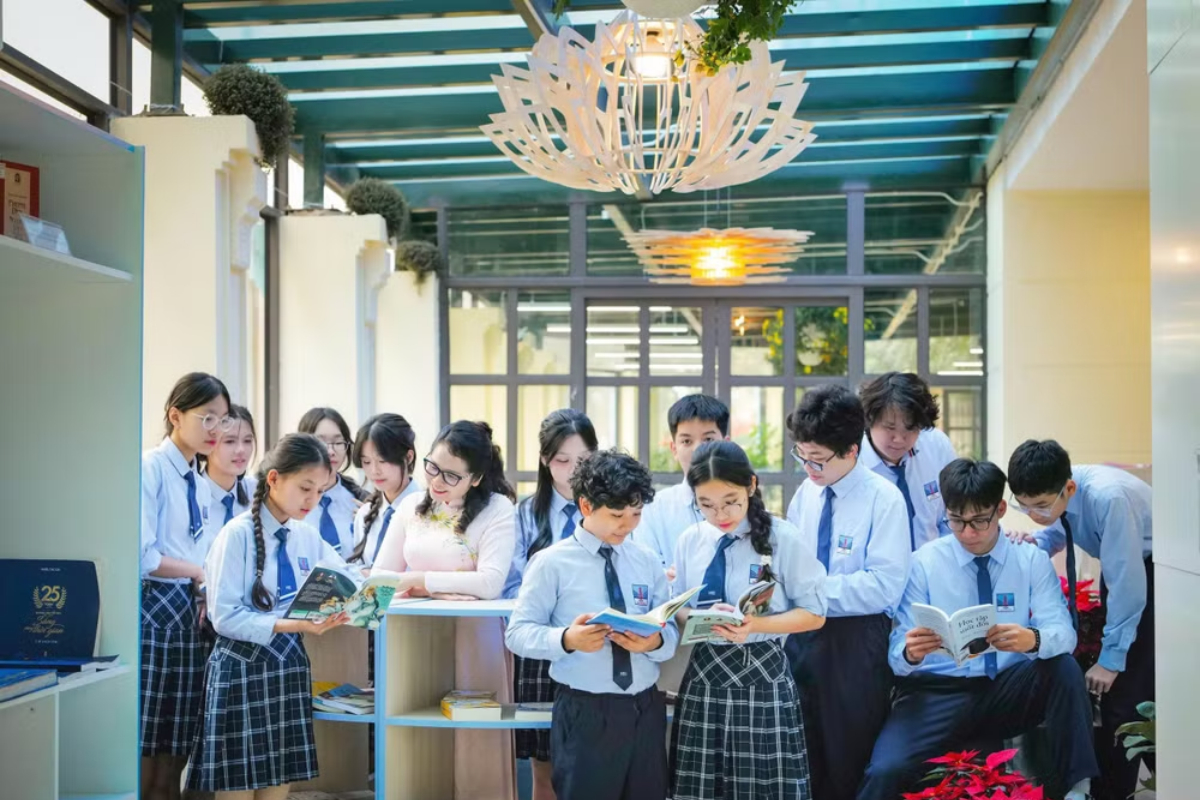
Nguyen Sieu School And Eight Difficult Relocations
Nguyen Sieu School was among the early private schools in Vietnam. During its first 13 years, the school faced significant challenges with facilities and moved between rented and borrowed premises.
The school eventually received land from the State and began building a more stable foundation. In the early 2000s, it moved to its current area in Yen Hoa, marking a significant stage in its development. The school’s own historical timeline records its move to its current home in Cau Giay District in 2003.
For Nguyen Thi Minh Thuy, Principal of Nguyen Sieu Secondary and High School, the school’s 35-year history is about more than buildings and programmes.
She is also a former student of the school. After graduating from Hanoi Pedagogical University, she returned to Nguyen Sieu and worked across several roles, including teaching, academic administration and school administration.
That experience has given her a long-term perspective on the school’s development. Ms. Thuy shared,
“If we hadn’t been steadfast and resilient in following the path we’ve chosen, there probably wouldn’t be a Nguyen Sieu Secondary and High School today.”
The experience demonstrates the importance of consistency in education. Facilities and programmes can change, but a school’s underlying purpose can provide continuity for successive generations.
Choosing English As A Pathway To International Education
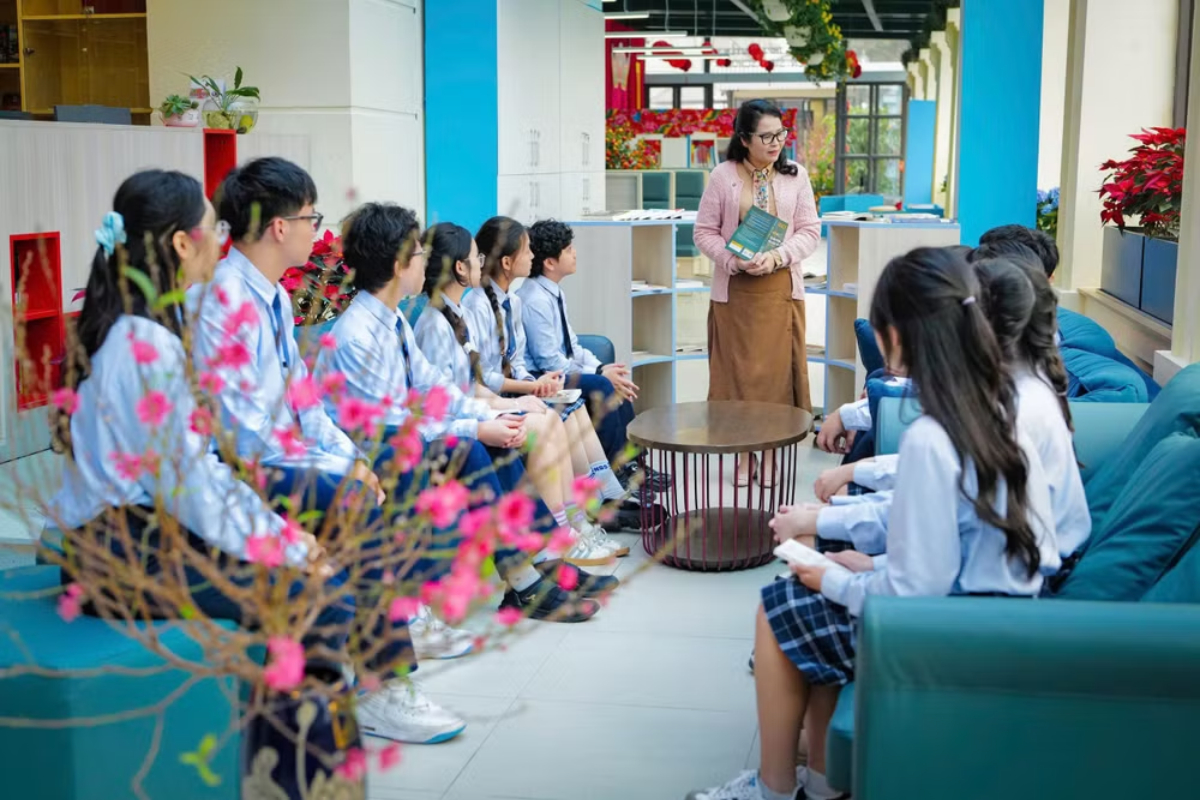
One of the major decisions in the development of Nguyen Sieu School was to place greater emphasis on English alongside Mathematics and Literature.
In the early years, English teaching often focused heavily on grammar. The school, however, recognised that students also needed opportunities to develop listening, speaking and communication skills.
From 2006, Nguyen Sieu began employing native English-speaking teachers. This gave students greater opportunities to use English in real communication and helped establish the foundation for later international programmes.
The school subsequently expanded its international education provision. In 2014, Nguyen Sieu launched the Cambridge Assessment International Education programme and became the first Vietnamese school to gain Cambridge accreditation for its Primary, Secondary and High Schools, according to its published school history.
The Cambridge programme has since expanded considerably. Nguyen Sieu’s current information describes pathways leading to Cambridge International qualifications alongside the Vietnamese High School Diploma.
According to Ms. Thuy, using English in learning not only enhances foreign language skills but also helps students access knowledge and international issues. She said,
“You will become true global citizens so that you can build the character of Vietnamese people to reach the world.”
For students, this approach can provide more than language proficiency. Learning subjects through English can also give them greater access to international academic resources and prepare them for university study in different countries.
The Square – Circle Philosophy At Nguyen Sieu School
International education is only one part of the school’s approach.
At the centre of Nguyen Sieu School’s educational thinking is the “Square – Circle” philosophy. The school associates this philosophy with Master Nguyen Van Sieu and the idea, “While knowing that roundness is wise, we aspire to take squareness as the model.”
For Ms. Thuy, education should develop both competence and character. Academic knowledge and examination results remain important, but they should not be the only measures of a student’s development. Ms. Thuy said,
“I chose an international educational philosophy because I wanted to affirm that studying an international program does not mean students lose their identity. They can acquire international knowledge but still need to preserve Vietnamese values, qualities, and cultural foundations.”
This balance is particularly relevant to families considering international or bilingual education.
Students may gain access to international curricula, qualifications and university pathways while continuing to develop an understanding of their own language, culture and values.
Bringing Educational Philosophy Into The Classroom
The school’s philosophy is also reflected in its approach to teaching and learning.
Since 2023, Nguyen Sieu School has implemented the High Performance Learning (HPL) framework across its teaching activities. The school describes itself as the first school in Vietnam to join the global HPL community.
HPL is not taught as a separate subject. Instead, the school incorporates higher-order thinking skills, values, attitudes and qualities into lessons.
Teachers identify not only what students need to know, but also the skills and qualities they should develop through the learning process.
Reflection is another important part of this approach. Students are encouraged to consider what they have done well, where they need to improve and how they can make further progress.
The school also uses digital tools to help students track their development. Badges and stars are intended to help students recognise their individual progress rather than create competition between classmates. She shared,
“Achievements are still important, but they are not the only measure of progress. The beauty here is not about physical appearance, but rather about intellectual beauty, about the excellence in thinking and acting of each individual.”
This focus on reflection can be valuable for both students and teachers. It encourages learners to look beyond immediate results and consider how their habits, skills and decisions contribute to longer-term development.
From Nguyen Sieu School To International University Pathways
The school’s international focus is also reflected in the destinations chosen by its graduates.
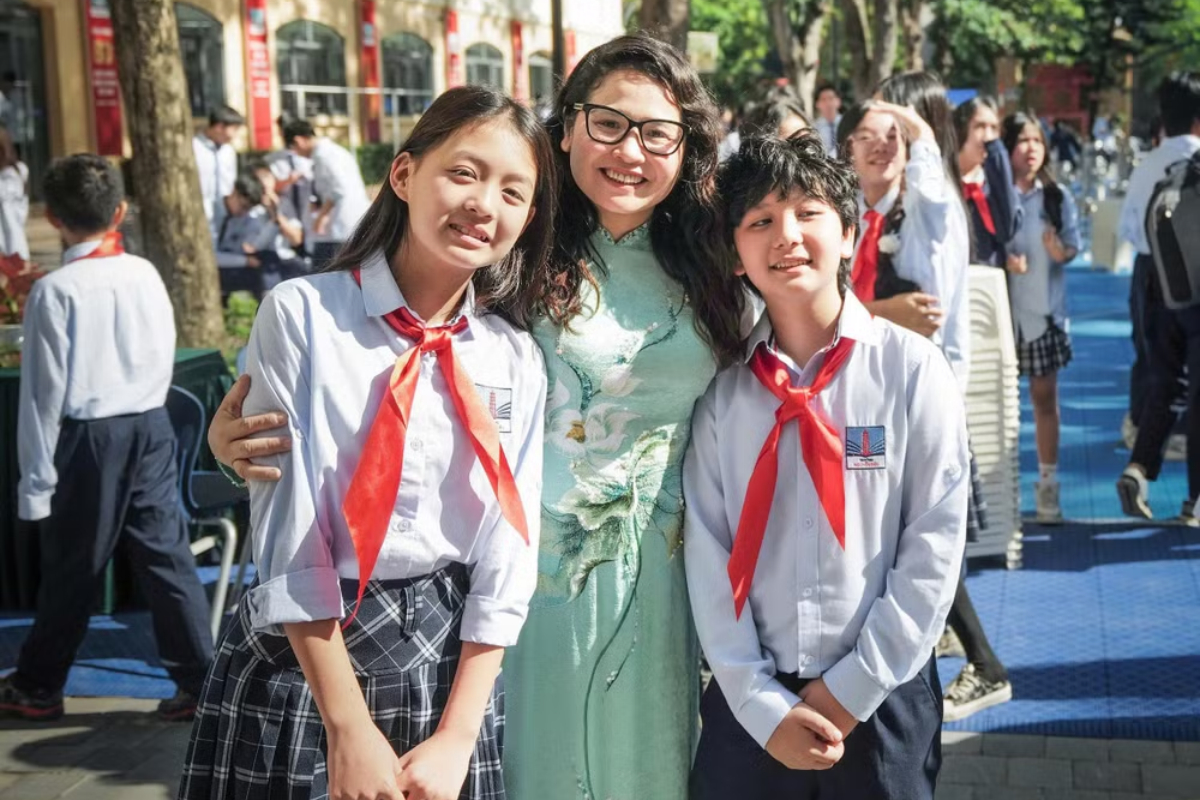
According to Ms. Thuy, 223 Year 12 students in the AL and AE programmes enrolled this year. Of these, 141 chose domestic universities, while 82 opted to study abroad or pursue international programmes.
Their university choices span Vietnam, North America, Australia, Asia, the UK and Europe.
Domestic destinations include Hanoi University of Science and Technology, National Economics University, Foreign Trade University, Vietnam National University, Hanoi Medical University and Hanoi Law University.
International destinations include Purdue University, the University of Illinois Urbana-Champaign, the University of Wisconsin-Madison, Rutgers University-New Brunswick, Villanova University and Denison University in the United States.
In Australia, students have chosen universities including the University of Melbourne, the University of Sydney, UNSW Sydney, Monash University and the University of Queensland.
In Asia, destinations include the National University of Singapore, the Chinese University of Hong Kong, the University of Hong Kong, Waseda University and Ritsumeikan Asia Pacific University.
Students have also progressed to universities including the University of Amsterdam, Erasmus University Rotterdam, KU Leuven, Aalto University, Imperial College London, the University of Bristol and the University of Bath.
These pathways illustrate the range of options available to students following international programmes. However, they also show why academic preparation needs to be accompanied by communication skills, independence and the ability to adapt to different learning environments.
Student Achievement And The Value Of Long-Term Preparation
One of the students highlighted from the 2026 graduating class is Nguyen Phan Quynh Anh from Class 12AL0, who was admitted to the University of Toronto in Canada with a full scholarship.
Another standout student is Nguyen Ha Vy from Class 12AL0, who studied at Nguyen Sieu for 12 years.
Ha Vy completed her A Level programme with four A* grades in Mathematics, Advanced Mathematics, Chemistry and Physics. She also achieved an IELTS score of 8.0.
Her university offers included the National University of Singapore, Nanyang Technological University, the Chinese University of Hong Kong and the University of Hong Kong, as well as universities in Australia.
She received a 100% scholarship from CUHK and 50% scholarships from NUS and NTU, alongside other scholarship offers.
Ultimately, she chose the National University of Singapore with a 50% scholarship.
Her journey provides an example of how sustained academic preparation can open multiple international pathways. It also highlights the importance of consistency over many years rather than focusing only on results in the final school year.
What Nguyen Sieu School’s 35-Year Journey Shows
The story of Nguyen Sieu School is ultimately about more than its eight relocations, international programmes or university destinations.
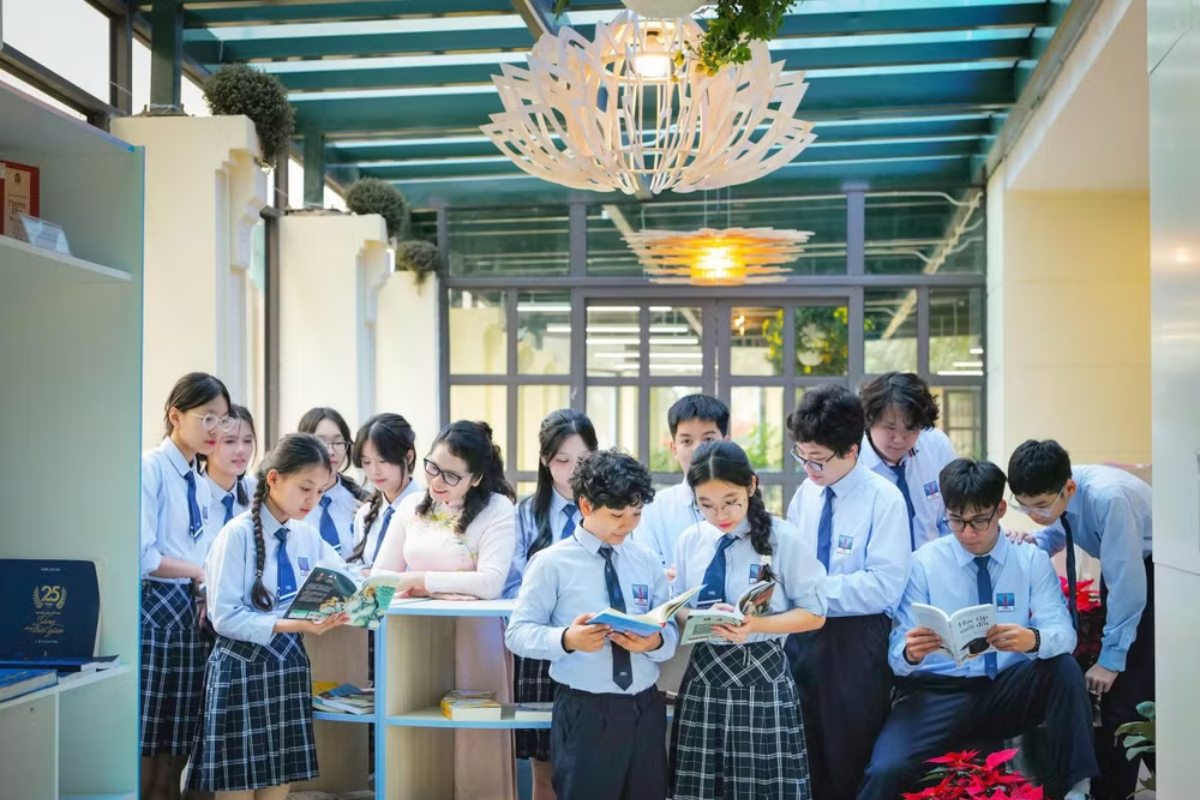
Its development shows how a school can change its facilities, curriculum and teaching practices while maintaining a clear educational identity.
For parents, the journey offers a useful perspective when considering international education. A global curriculum does not necessarily mean giving up cultural identity. The more important question is how effectively a school combines academic opportunity with character, values and a sense of belonging.
For educators and school leaders, Nguyen Sieu’s experience also illustrates the importance of long-term consistency. Educational change can take years to establish, particularly when new programmes require investment in teachers, curriculum and student support.
Ultimately, the school’s 35-year journey is a story of adaptation without abandoning its central philosophy.
As Nguyen Sieu School enters its next chapter, its challenge will be to continue responding to the needs of students while preserving the values that have shaped generations of learners.
That balance between international opportunity and local identity may become increasingly important for schools preparing students for a world in which they will study, work and collaborate across borders.