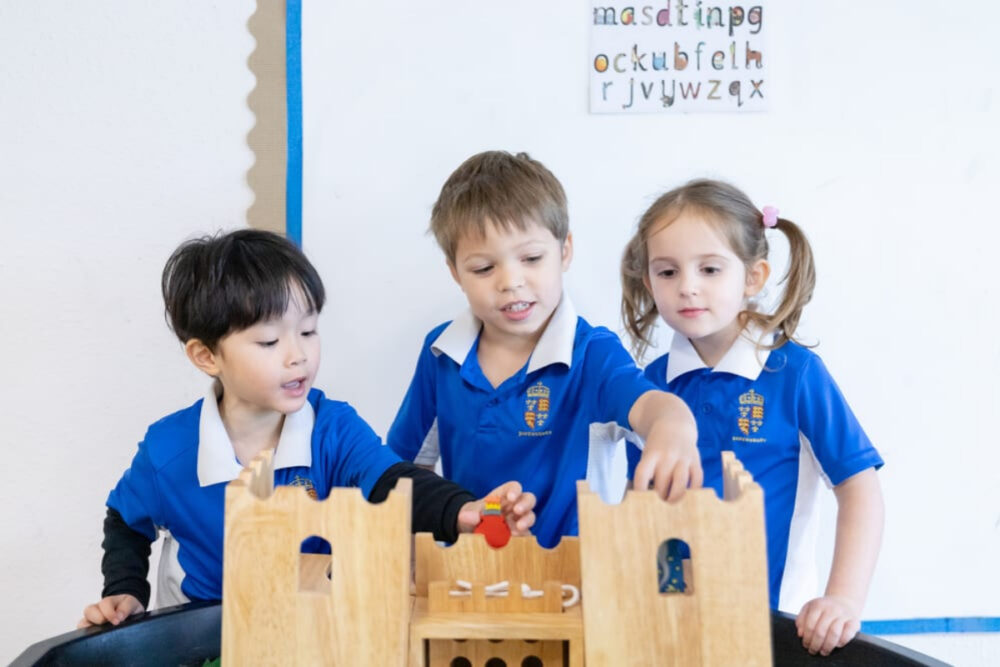
Shrewsbury Bangkok’s Hanqing Bilingual Pathway has reached its first major milestone, with its founding pupils moving into Year 1. The transition marks an important step for families considering a British education that gives Mandarin and English equal importance from the earliest years.
Shrewsbury International School Bangkok City Campus marked the milestone on 16 October 2026. The founding cohort, which began the programme in August 2025, has now progressed from the Early Years Foundation Stage into Key Stage 1.
According to the Bangkok Post, the new Year 1 class includes families connected to Thailand, the United States, France, the United Kingdom and China.
The Hanqing Bilingual Pathway launched for children as young as three. It follows a 50-50 Mandarin-English immersion model, giving both languages a central role in pupils’ early learning.
From Year 1, native-speaking teachers for both languages join the team, alongside a specialist Chinese maths teacher. This approach aims to help children develop language skills while building their understanding of core subjects.
How Shrewsbury Bangkok’s Hanqing Bilingual Pathway Works
The Hanqing Bilingual Pathway offers a different option for families seeking both a British curriculum and sustained Mandarin learning.
Many British curriculum schools in Thailand teach Mandarin as an additional language within an otherwise English-medium environment. However, Hanqing gives Mandarin and English equal weight through a dedicated immersion pathway.
The programme runs alongside the school’s standard British curriculum stream at the City Campus. Families can therefore consider which approach best suits their children’s language needs and longer-term educational plans.
The name Hanqing combines Chinese characters associated with harmony and clarity. It reflects the pathway’s focus on developing competence in two languages from an early age.
What The Move Into Year 1 Means For Pupils
Moving into Year 1 gives families an early opportunity to see how the bilingual pathway progresses beyond nursery and reception-level learning.
For children, the next stage brings more formal learning, including literacy and numeracy. Developing these skills in two languages requires a carefully planned approach to teaching, classroom communication and progression.
The presence of native-speaking English and Mandarin teachers, alongside a specialist Chinese maths teacher, forms part of the school’s model for this transition.
However, one cohort moving into Year 1 does not yet show how pupils will progress through the full primary curriculum. Families will need further evidence as the programme develops, particularly around reading, writing and mathematical understanding in both languages.
What Parents Should Consider When Choosing Bilingual Education
For parents, the pathway raises important questions about language development and continuity. A bilingual programme can provide regular exposure to two languages, but its suitability depends on each child’s needs and the support available at home and school.
Families may wish to ask how teachers assess progress in Mandarin and English, how the school supports children who are beginners in either language, and how it addresses differences in literacy development.
It is also worth understanding how the programme will maintain academic progression as pupils move into more demanding year groups. Clear information about curriculum coverage, assessment and language outcomes will help parents make informed decisions.
Will The Hanqing Pathway Continue Through Primary School?
The move into Year 1 is an early test of continuity for Shrewsbury Bangkok’s Hanqing Bilingual Pathway. It gives the school a foundation on which to develop the programme, while offering families a clearer view of its next stage.
The school has not announced how far the pathway will extend through primary education. Its future development will determine whether pupils can continue with the same bilingual approach through Key Stage 2 and beyond.
For now, the founding cohort’s progression marks a meaningful step for families interested in a British education with equal emphasis on Mandarin and English. The programme’s longer-term value will become clearer as pupils advance and the school shares more evidence of their academic and language development.