By Anwesha Sengupta
Which Egypt Is Right for Your Family? There is no single way to do Egypt. Some come for ancient temples and four thousand years of history; others come for coral reefs, desert adventures and long days by the sea. Whatever your family enjoys, Egypt has a version to match.
The ancient Egyptians built everything to last forever, and in a way it has. You can still walk through their temples, read their writing on the walls and stand in the tombs they prepared for the afterlife. That was the Egypt me and my husband saw. But Egypt has a second side, and a family close to me found it on the Red Sea coast, among reefs, dunes and endless blue water. This is the story of both.
Cairo, Where it Begins
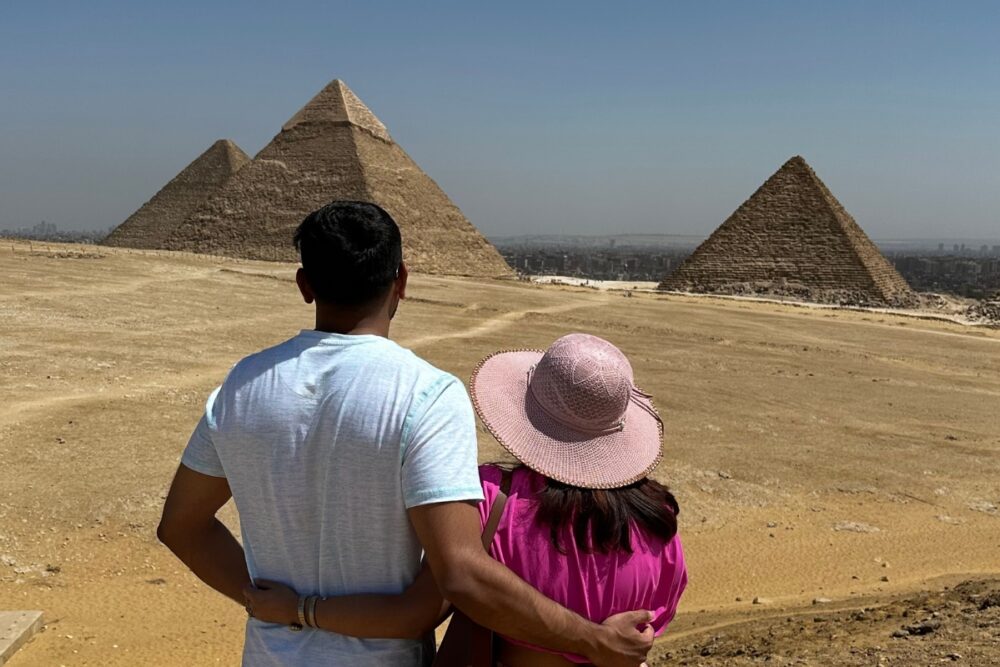
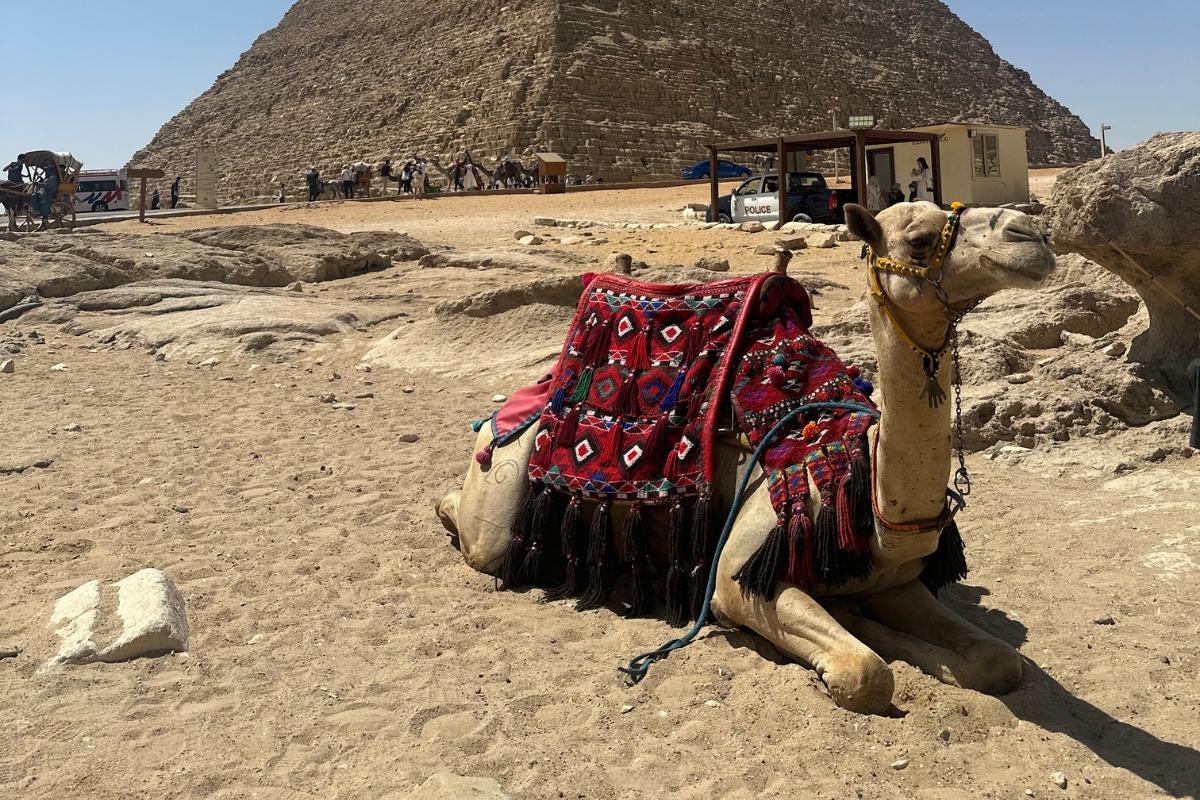
Nothing prepares you for the pyramids. You have seen them a thousand times in books and on screens, and still, standing at the base of the Great Pyramid of Giza, you find yourself completely mesmerised. More than two million blocks, many weighing several tonnes, raised with ramps, rope and human will around 4,500 years ago.
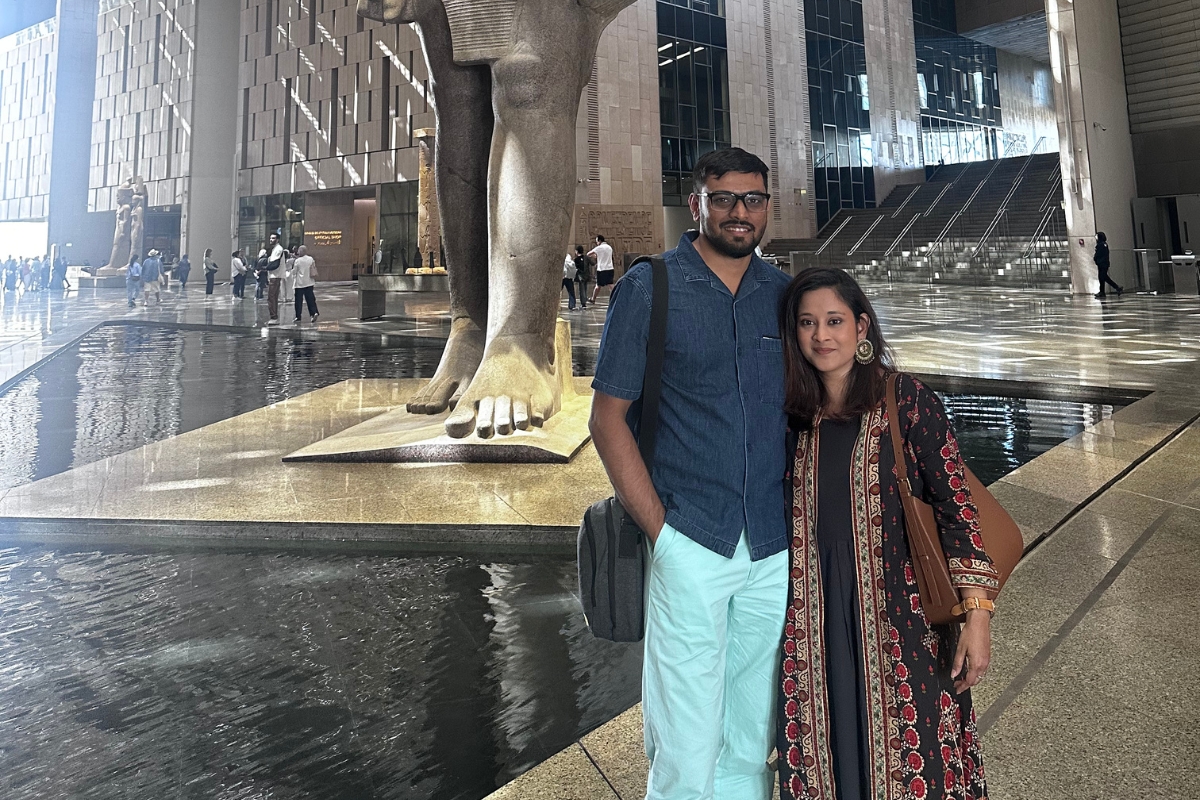
That sense of wonder followed us into the Egyptian Museum in Tahrir Square. The newer Grand Egyptian Museum at Giza is magnificent, with space and light to match its collection, but it was the old museum that stole my heart. Its crowded halls and creaking wooden cabinets feel less like a gallery and more like an archaeologist’s storeroom, where every corner hides something extraordinary. It was there that the hieroglyphs first truly spoke to me. These were not decorations. They were a deliberate act of preservation by a civilisation determined that its knowledge, its prayers and its names would outlive it. And they did.
We closed our time in Cairo at Khan el-Khalili, the great bazaar that has traded since the fourteenth century. Brass lanterns, spice sacks, perfume bottles and the endless, good-humoured art of bargaining.
Luxor, the World’s Greatest Open-Air Museum
If Cairo introduces you to ancient Egypt, Luxor lets you live inside it. The city sits on the site of ancient Thebes, and the scale of what remains is staggering. At the Karnak Temple Complex, built and rebuilt by pharaoh after pharaoh over some two thousand years, we walked completely smitten at the scale of what remains. A short distance away, Luxor Temple glows gold at dusk, linked to Karnak by the Avenue of Sphinxes along which sacred processions once moved.
Across the river on the West Bank lies the Valley of the Kings, a sun-scorched desert gorge holding more than sixty royal tombs. Going underground is an experience in itself. The corridors descend into chambers where the colours on the walls look impossibly fresh, untouched by three thousand years.
Inside Tutankhamun’s tomb, the only royal burial in the valley found almost intact, the young king still lies in his painted chamber, more than three thousand years after he was laid to rest. This is where we came to understand how the ancient Egyptians saw death. Not as an ending, but as a vital passage. The afterlife was a chance for rebirth and eternal happiness, and every tomb was built as a carefully prepared doorway to it.
Above and Upon the Nile
Another two experiences in Luxor that have stayed with us more vividly than almost anything else was the sunrise hot air balloon ride over the West Bank as we saw the Valley of the Kings from above and the second was a sunset sail on a felucca, the traditional wooden sailboat that has carried people along this river for centuries.
Upriver to Aswan
From Luxor we sailed to Aswan, past palm groves, mud-brick villages and fishermen casting their nets. Along the way we stopped at temples best reached by river: Edfu, dedicated to Horus and one of Egypt’s best-preserved, and Kom Ombo, a rare double temple at the water’s edge.
Aswan has a gentler rhythm, with the Nile running between granite boulders and golden dunes. It is the heartland of the Nubian people, whose painted houses, music and hospitality reflect a culture that has endured great change.
Abu Simbel, the Final Morning
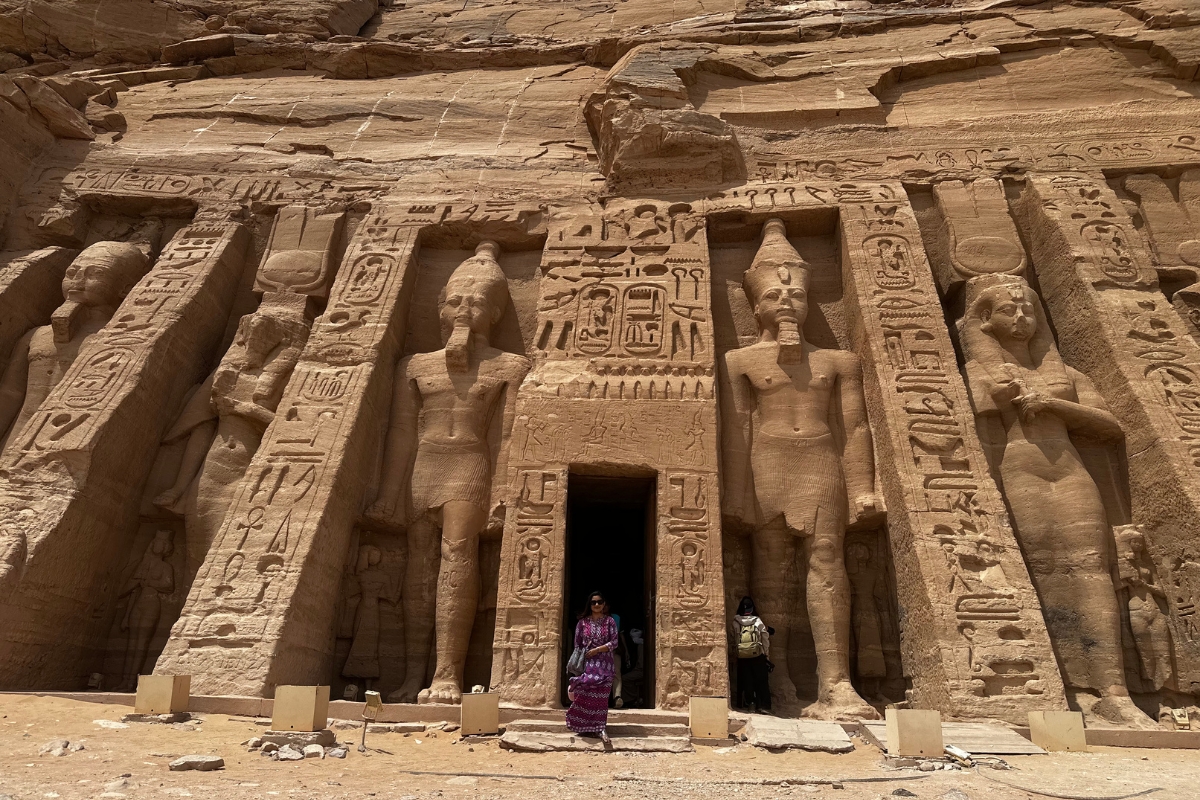
On our final morning, we left Aswan before dawn and drove south across the desert to Abu Simbel. Ramses II built his great temple here more than three thousand years ago, its entrance guarded by four colossal statues of the king. In the 1960s, the entire temple was cut apart and rebuilt on higher ground to save it from Lake Nasser. Standing before it, you appreciate both achievements: the ancient one and the modern one.
The Red Sea Side
While we followed the pharaohs, a family close to me took a very different trip. They went to Sharm El Sheikh, where the Sinai desert meets the Red Sea, and stayed at the DoubleTree by Hilton, a resort of palm-lined lawns and lit pools.
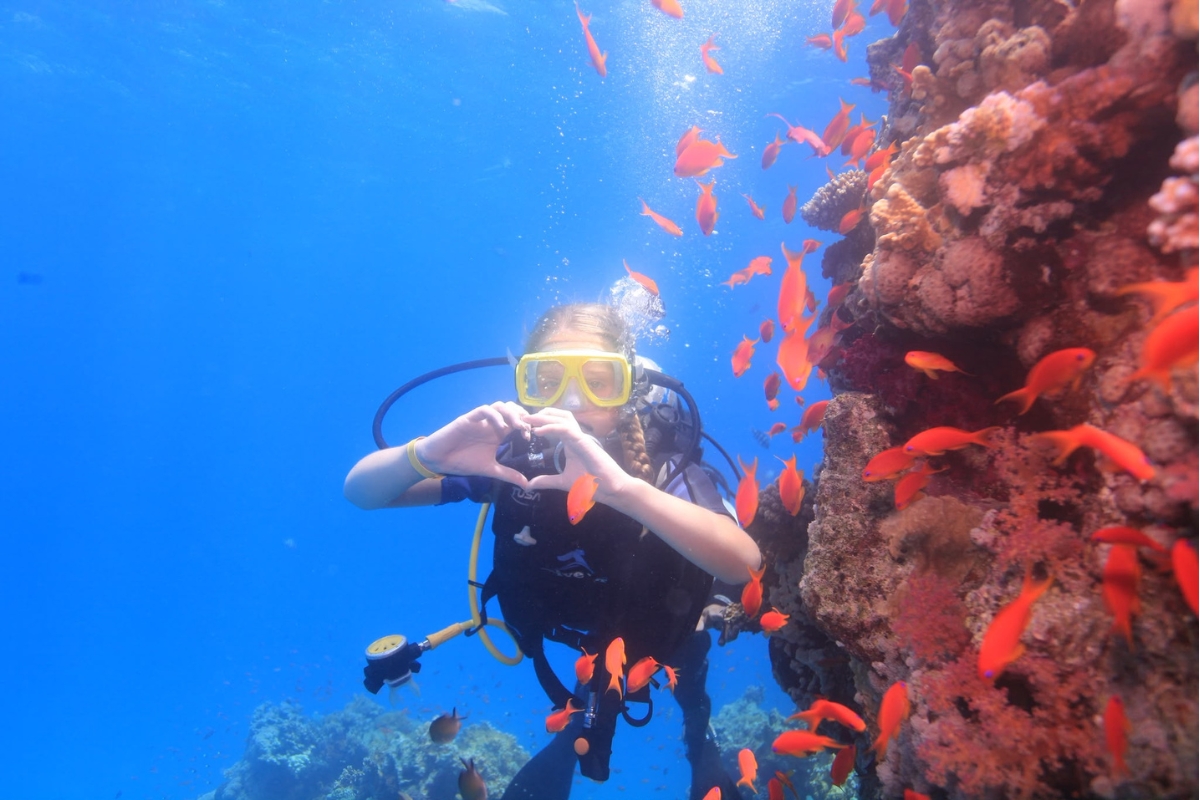
Their highlight was Ras Mohammed National Park, at the southern tip of the Sinai and one of the world’s best-known marine reserves. They snorkelled and dived along coral walls teeming with orange anthias.

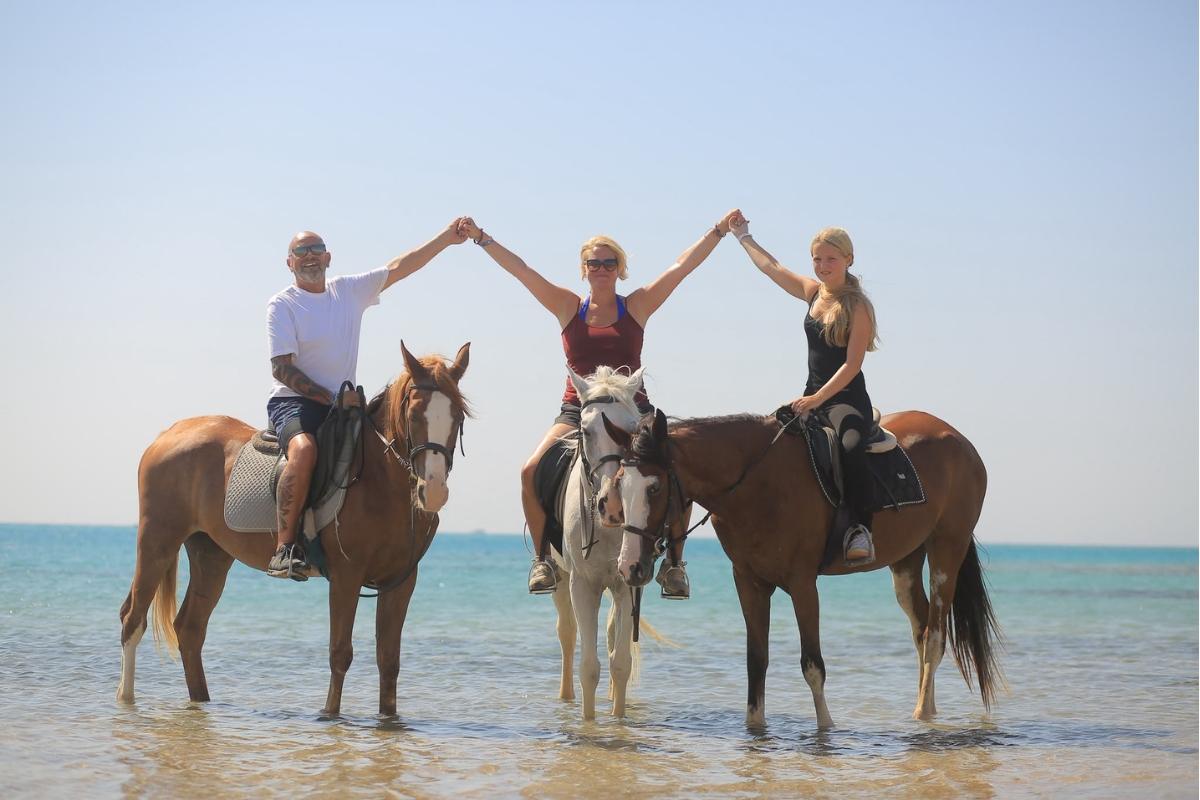
On land, they rode quad bikes across the desert beneath the Sinai mountains, rode horses through the shallows and, to escape the afternoon heat, spent an hour in an ice bar wrapped in fleece-lined robes.
Their Egypt had no temples at all, just sea, sand and time together, and it was every bit as memorable as ours.

Two Journeys, One Egypt
Put our photographs side by side and you might think we had visited two different countries. Mine are full of carved stone, painted tombs and the beauty of the Nile River. Theirs are full of coral, horses and the open sea. Yet both trips share something essential, the feeling of being somewhere that has welcomed travellers for thousands of years and still has the power to surprise them.
If you crave history, Egypt will hand you four millennia of it and let you walk through every chapter. If you crave water, sun and adventure, the Red Sea coast will give you some of the finest diving on earth and days that end by a glowing pool. And if, like most of us, you want a little of both, Egypt is generous enough to offer that too.