German language learning has found an unusual but growing place in selected Philippine public schools. What began as a foreign-language initiative has developed into an opportunity for students to build communication skills, cultural awareness and international perspectives.
The programme emerged from a Department of Education foreign-language pilot in 2009. German teacher training followed in 2011, with support from the Goethe-Institut Philippines. The partnership continues to support German teaching through teacher training, educational cooperation and cultural programmes.
For students, learning a language such as German can offer more than another subject on the timetable. It can provide a different way of understanding people, cultures and ideas.
German Language Learning Starts With A Challenge
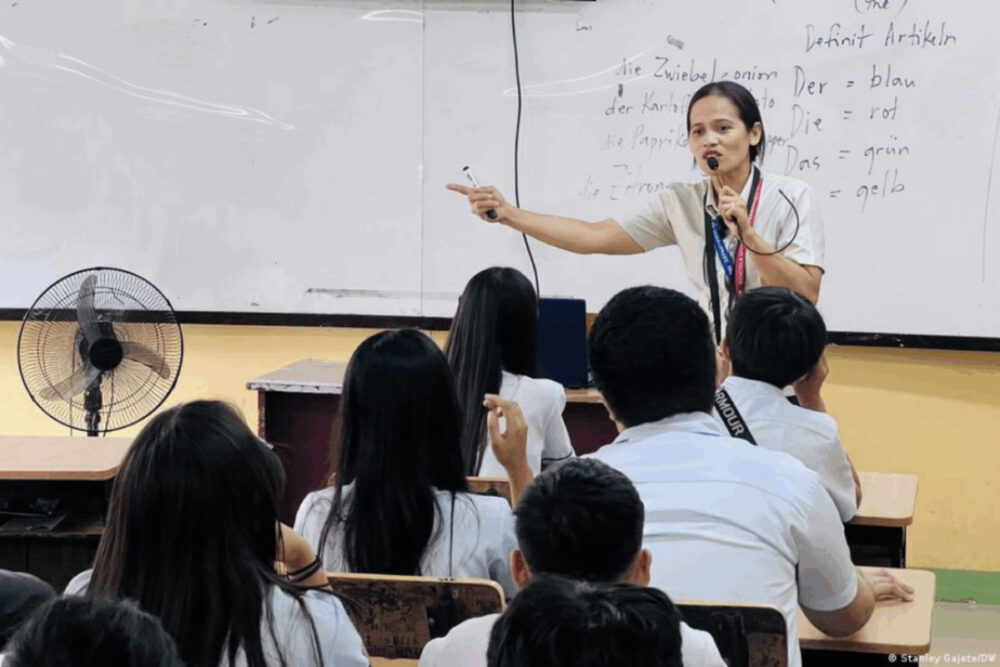
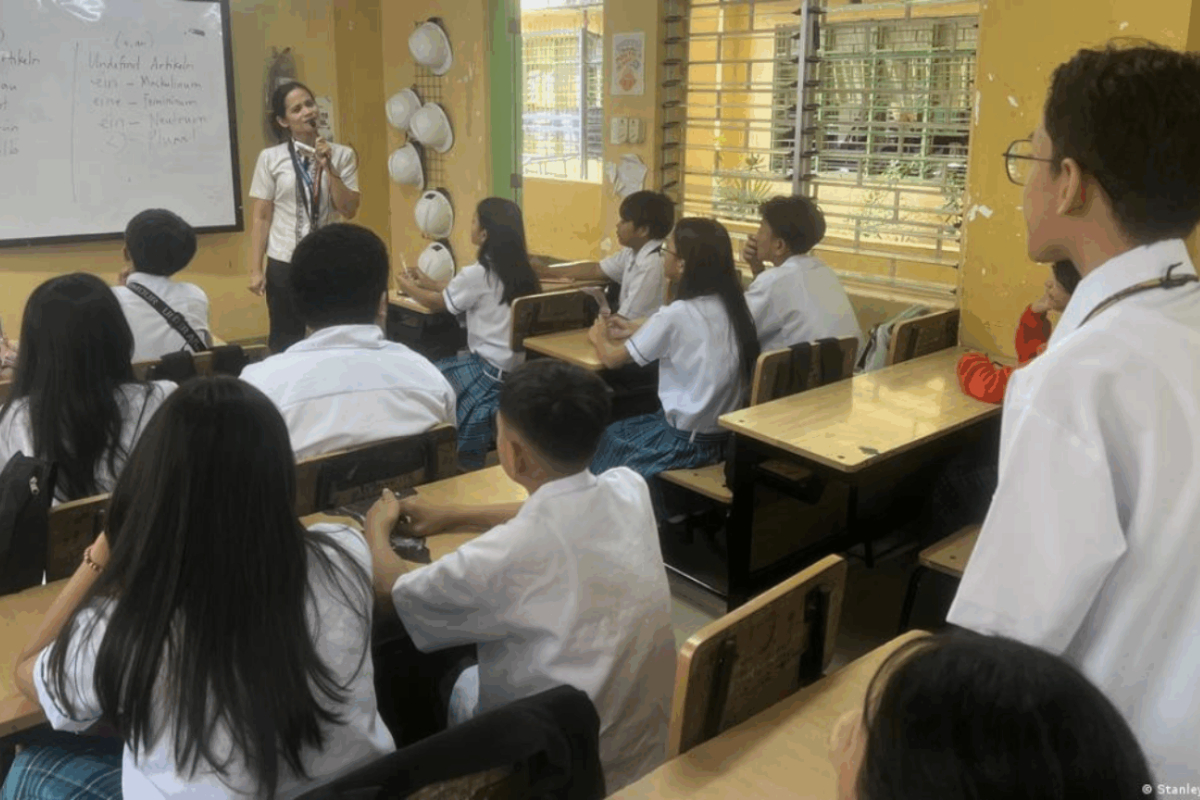
A German lesson at a Philippine public school may begin with a simple “Guten Morgen”.
Students then practise unfamiliar sounds before moving into short conversations about directions, food, family and culture.
For some teachers, however, learning German was initially just as challenging as teaching it would later become.
Marites Lacson, an English teacher at Paranaque High School in Metro Manila, remembers when the Department of Education invited teachers to participate in foreign-language courses.
She initially found German intimidating. Nevertheless, she decided to take the opportunity. She said,
“I took it as a challenge. I really put myself into loving the program because I now see it as an investment.”
Around 600 teachers applied for the 2011 programme nationwide, according to Lacson. Those selected undertook intensive training at the Goethe-Institut. Lacson said,
“I believe the German language is one of the most difficult languages to be learned.”
She points to the language’s detailed spelling, grammar and syntax. However, she believes these features can also encourage students to think carefully and systematically.
The programme also reflects a wider educational priority around global employability. She said that globalization means that students should be globally competitive when it comes to the workplace. One way to do that is to be language competitive.
How The Goethe-Institut Supports German Teachers
The Goethe-Institut Philippines plays an important role in supporting German language education in the country.
Its educational cooperation work includes professional development for teachers, teaching materials, cultural programmes, scholarships and opportunities for students and educators.
The institute currently works with teachers, educational authorities, universities and other partners to promote German language learning in the Philippines. Jens Rösler, head of the language department said,
“We have a big part, what we call educational cooperation. We cooperate with 21 high schools in the Philippines, including Paranaque High School, within a framework agreement with the Department of Education.”
Training is tailored to the needs and schedules of teachers. The Department of Education decides which schools participate, how many schools are included and which teachers are nominated for German classes, according to Julian Christopher Fuchs, the institute’s director in the Philippines.
The programme supports teachers beyond improving their own German language skills. It also helps them strengthen their teaching methodology and keep up to date with developments and knowledge about Germany.
The Goethe-Institut continues to provide professional development opportunities for German teachers in the Philippines, Germany and online. It also offers teaching resources and supports professional communities for educators.
German Language Learning Extends To Universities
The partnership is not limited to secondary schools.
The Goethe-Institut also works with universities in the Philippines, while offering German courses and examinations for a wider group of learners.
Universities involved in German language education include the University of the Philippines, Ateneo de Manila University, De La Salle University and the University of Santo Tomas.
The institute also provides language programmes for Filipinos preparing to live and work in Germany. Rösler said,
“At this stage, mostly anyone can enroll in our classes.”
The Goethe-Institut’s broader language programme offers German courses from A1 to C2 and internationally recognised examinations.
Rösler said around 2,200 students attend the institute’s courses each year, while approximately 6,000 examinations are administered annually.
For students taking German through the Philippine Special Program in Foreign Language (SPFL), the Goethe-Zertifikat Fit in Deutsch 1 provides an opportunity to work towards an internationally recognised A1-level qualification.
Why English Can Help Students Learn German
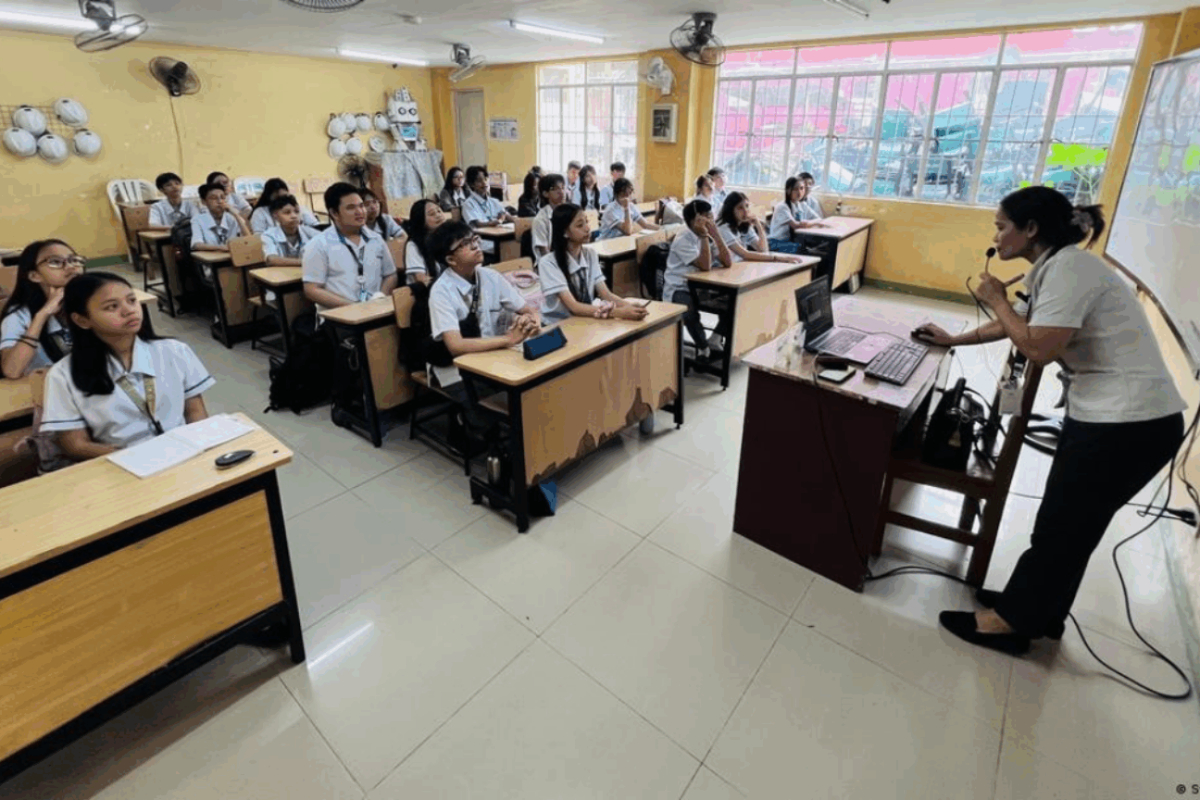
At Paranaque High School, students must demonstrate strong academic performance before joining German classes. English proficiency is also one of the programme’s requirements.
For Lacson, explaining the purpose of the programme is an important part of encouraging students to persevere.
“When we introduced this to the learners, first and foremost we let them understand why we should have this. We also let them feel that it’s OK to find it difficult. We assure them we will be very patient.”
That message may be particularly important when students encounter unfamiliar grammar or pronunciation.
Learning another language takes time. Therefore, a supportive classroom environment can help students see mistakes as part of the learning process rather than a reason to give up.
Student Cheska Anne Macasinag believes commitment makes the difference.
She described learning German as similar to studying any other subject “as long as you put your passion into it and you really listen to the teacher’s lessons.”
The school has also given students opportunities to share what they have learnt through activities focused on German language and culture.
Languages Can Open Different Perspectives
The value of German extends beyond vocabulary and grammar.
According to figures cited in the original report, nearly 15.5 million people worldwide were learning German in 2020, while around 106,000 schools offered German language education.
For educators, Jens Rösler highlighted the wider value of learning another language. He explained that studying a foreign language can help students understand the people and cultures behind it, rather than simply communicating with them in English. He also noted that foreign languages can encourage learners to examine problems from different perspectives.
This ability to approach ideas from different angles can be valuable across subjects. It can also help students develop greater cultural awareness and confidence when communicating with people from different backgrounds.
German Language Skills Can Support Future Opportunities
For some students, the benefits of German are already connected to future study and career opportunities.
Lacson recalled a former student who went on to study culinary arts. She explained that German had helped the student understand different cuisines and learn more about other cultures.
The example shows how language learning can connect with students’ interests beyond the classroom. German may be particularly useful for students considering international study, hospitality, tourism, culinary education or opportunities linked to Germany and other German-speaking countries.
The Goethe-Institut also continues to create opportunities for German teachers and learners in the Philippines. In 2026, its Philippine German Language Teachers’ Conference brought educators together to explore teaching methods, professional development and the role of German in education.
Fuchs also highlighted the wider personal value of learning languages. He described languages as “windows into new universes”, explaining that they enrich people’s lives by giving them new perspectives, which he considers especially important in today’s complex world.
What Philippine Schools Can Learn From German Language Education
The growth of German in Philippine public schools demonstrates how foreign-language education can be introduced beyond private and international school settings.
For students, it provides access to a language and culture they may otherwise encounter only later in life. For teachers, the programme has created opportunities for professional development and international engagement.
Moreover, the model shows the importance of sustained support. Introducing a foreign language requires trained teachers, appropriate resources and opportunities for students to practise what they learn.
The experience also offers a wider lesson for schools considering additional languages. Language learning is not simply about becoming fluent. It can help students communicate across cultures, explore different viewpoints and prepare for opportunities beyond their home country.
Ultimately, German’s place in Philippine public schools shows that a difficult language can become a meaningful educational opportunity when teachers are supported and students understand why learning it matters.