
For families raising children between countries and cultures, language carries something that cannot always be taught from a textbook. It is the sound of family conversations, the ability to speak to relatives in their own words, the stories passed between generations and a connection to a heritage that can become harder to maintain when everyday life takes place in another language.
A Mother’s Search for a Better Way
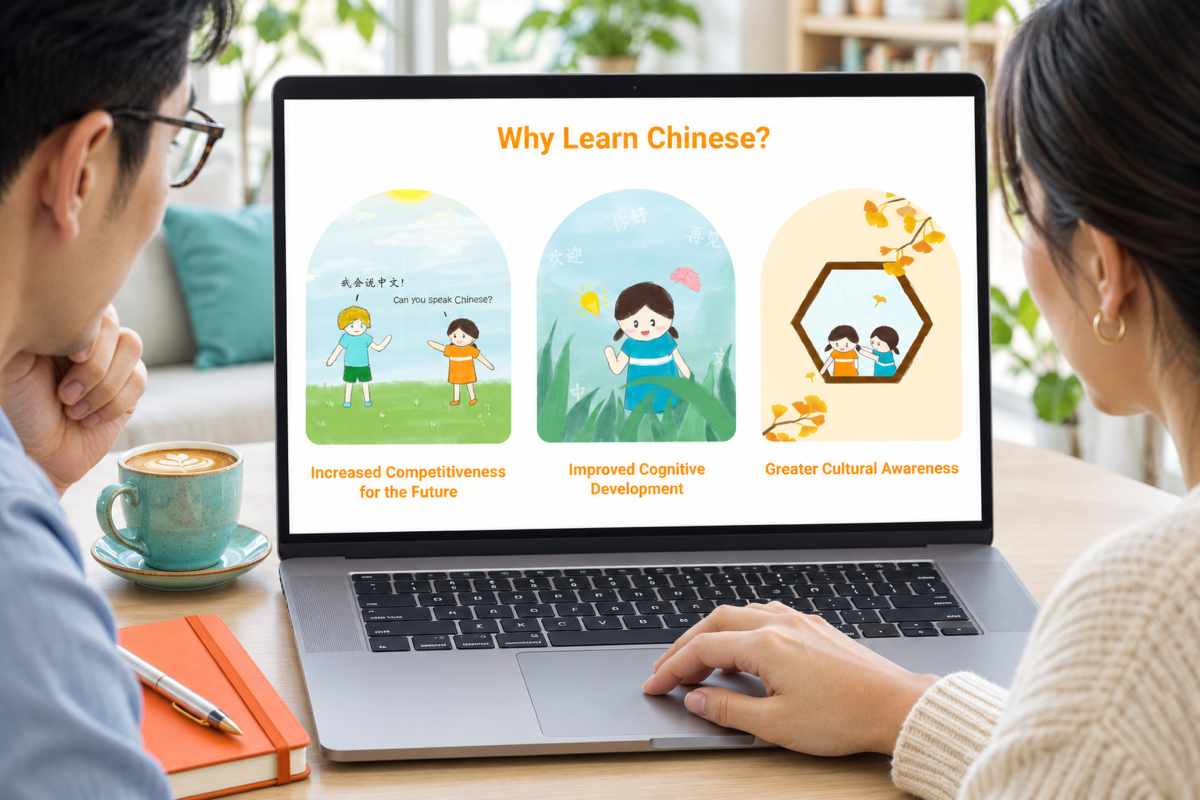
Jennifer Huang understood this challenge personally. Raising her children in France, she wanted them to grow up speaking Chinese, comfortable with their cultural identity and able to communicate naturally with family across generations. Yet finding an approach to learning that would genuinely capture their interest proved surprisingly difficult.
The choices were familiar to many parents: weekend language schools, private tutors and lessons built around repetition and memorisation. Jennifer wondered whether these traditional approaches could really inspire children to develop a lasting love of the language.
After a full week at school, would another set of lessons encourage curiosity, or simply become another obligation?
She began looking for something that would make learning Chinese feel less like extra homework and more like a natural part of growing up.With a professional background in marketing, consultancy and technology startups, Jennifer was accustomed to questioning established ways of doing things.
Although she had not set out to become an education entrepreneur, she recognised a problem that extended far beyond her own families. Across international communities, parents were facing similar difficulties, whether they were trying to preserve a heritage language or introduce their children to Chinese for the first time.
Her search led to a collaboration with Professor Joël Bellassen, a respected specialist in Chinese language education who served as France’s first General Inspector for Chinese Language Teaching. Their shared interest in making Chinese more accessible to young learners laid the foundation for hihilulu.
What makes Jennifer’s story particularly interesting is that the starting point was not technology. It was an understanding of how children experience learning, and the realisation that even the most academically sound teaching method must find a way to hold a child’s attention.
Making Chinese Feel Within Reach
Chinese is frequently described as a difficult language to learn, particularly for children accustomed to alphabet-based writing systems. Its characters can appear daunting, and the relationship between spoken language and written forms brings challenges that are quite different from those encountered when learning many European languages.
Jennifer and Professor Bellassen believed these challenges deserved a more thoughtful approach than simply asking children to memorise increasingly long lists of characters.
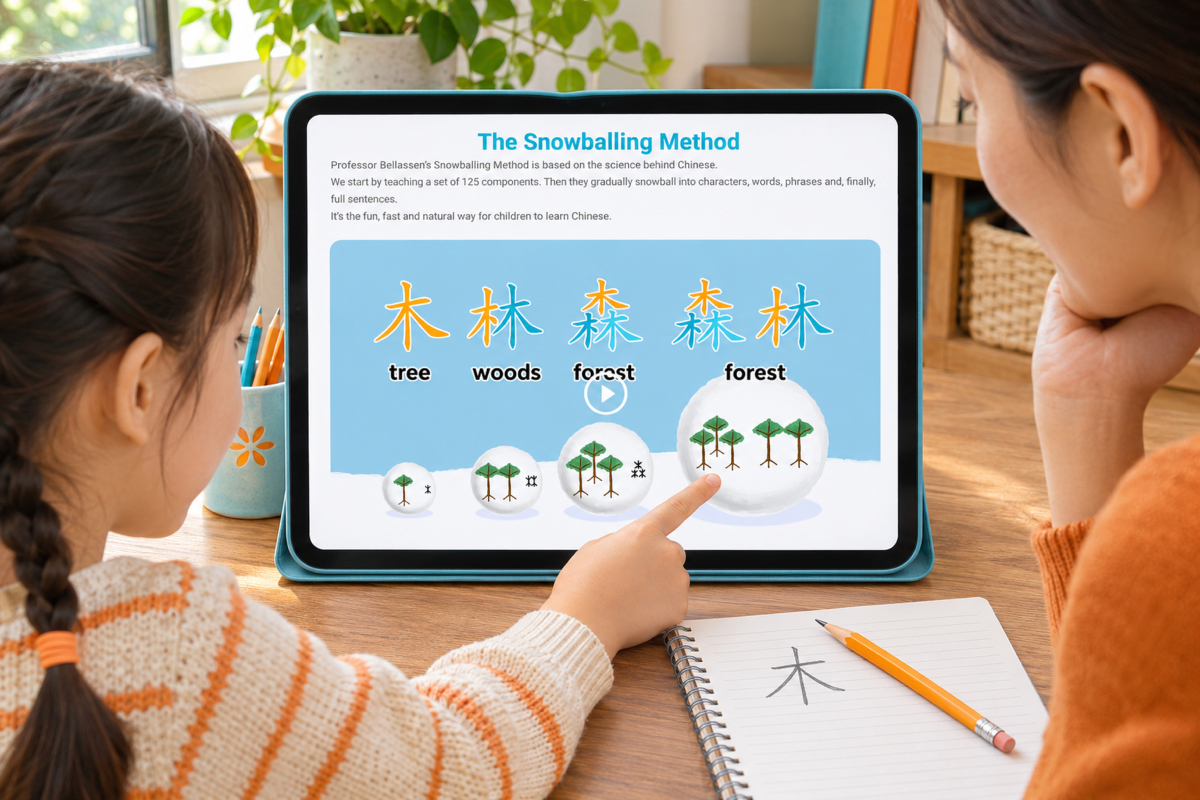
The methodology behind hihilulu draws on Professor Bellassen’s research, including his work on Dualism in Chinese language teaching and the Snowballing Method. Instead of treating every new character as an entirely separate piece of information, children begin with 125 foundational character components.
Gradually, those components build into recognisable characters, words, phrases and sentences.
There is an appealing simplicity to the idea. A language that initially appears unfamiliar becomes easier to approach when children begin recognising patterns and connections. The aim is to help them understand what they are learning, build confidence and experience the satisfaction of making progress.
Learning That Continues Beyond the Screen
Of course, a carefully designed methodology is only part of the equation. Anyone who has watched a young child lose interest halfway through a lesson knows that the way learning is presented can matter enormously.
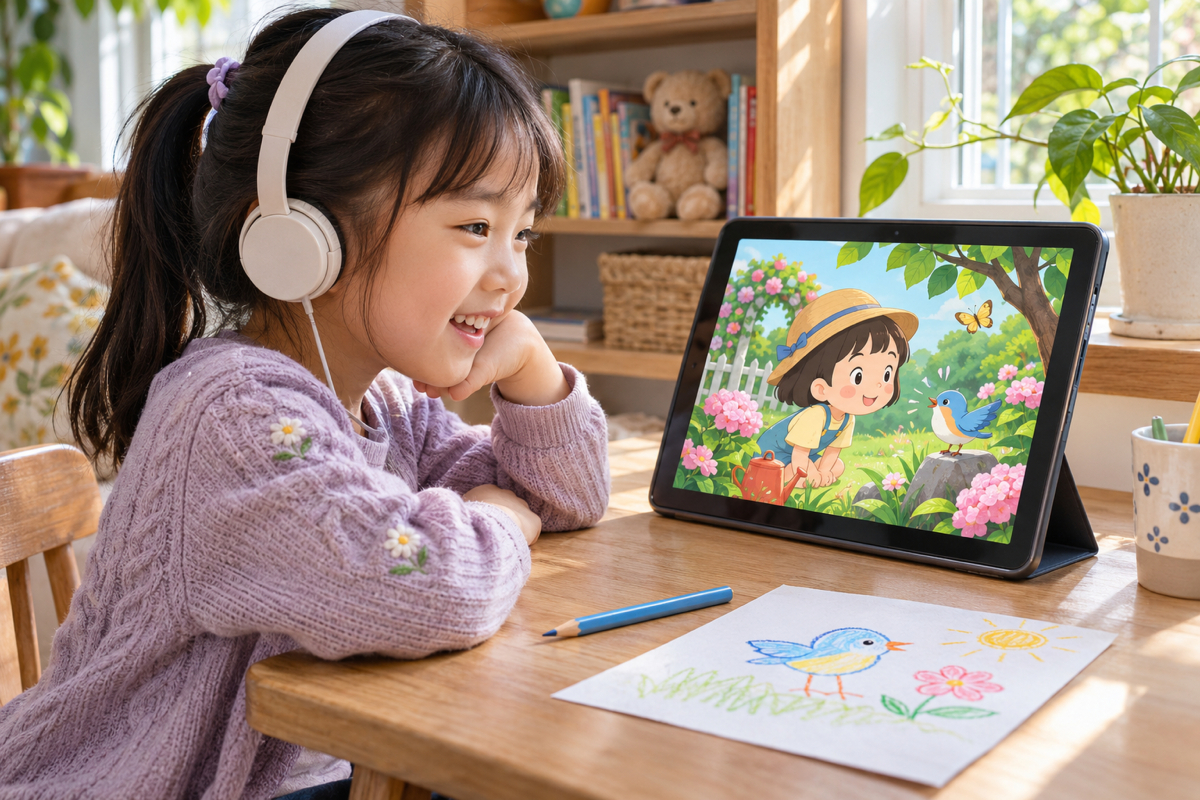
This is where hihilulu brings together research, imagination and technology. Animated stories introduce children to natural language in everyday situations, while interactive games, songs and cultural activities encourage them to listen, respond and practise. The lessons are designed to create an immersive environment where Mandarin becomes something children hear and use, rather than simply study.
Importantly, the experience does not have to begin and end with a screen. Physical learning materials, teacher-led activities and opportunities for conversation are intended to reinforce what children encounter digitally.
For parents concerned about the growing amount of time children spend on devices, that distinction is worth considering. Good educational technology should provide opportunities for learning that continue when the device is put away.
For teachers, the challenge is slightly different. A successful language programme must be engaging, but it also needs structure, progression and measurable outcomes. Schools need resources that support their teachers rather than adding another layer of administration, while children with different levels of prior knowledge need appropriate opportunities to develop.
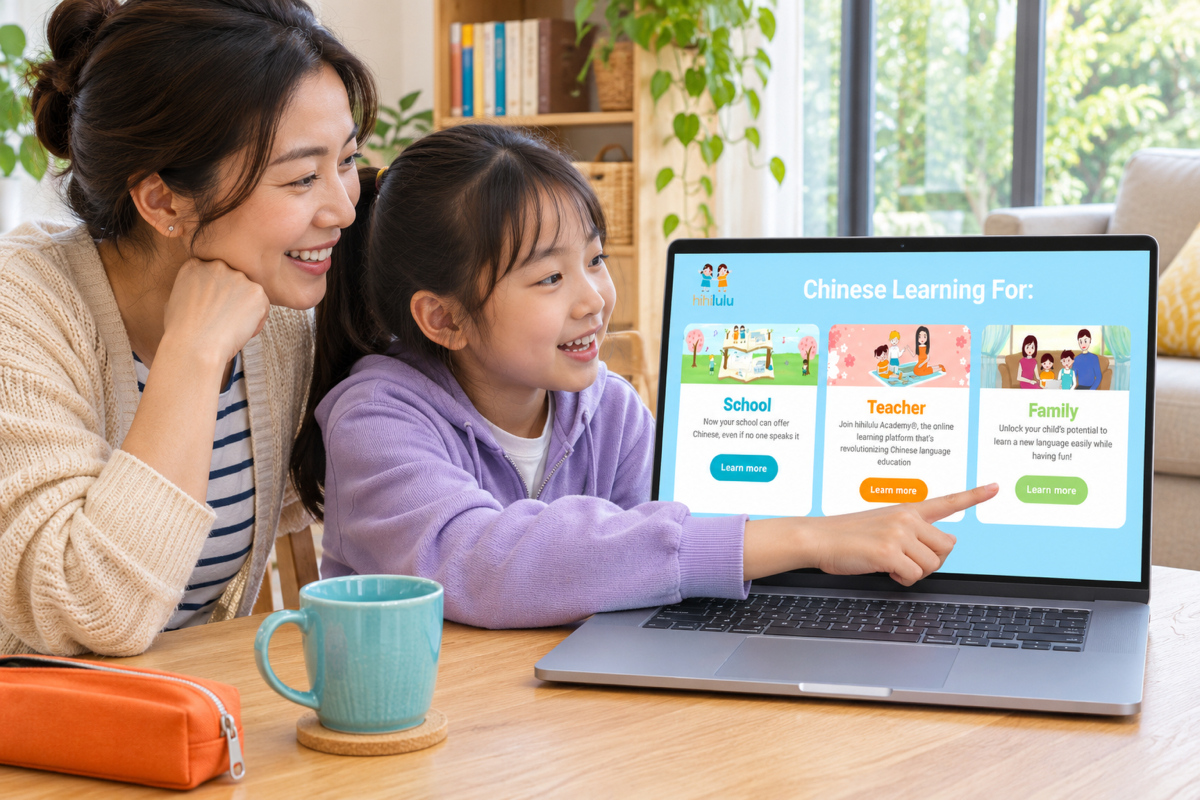
hihilulu seeks to address these practical considerations through curriculum resources, trained Mandarin teachers, learning assessments and progress reporting. Its programmes can be delivered in schools, online or through private lessons, allowing the approach to be adapted to different educational settings.
The Connection Between Language and Belonging
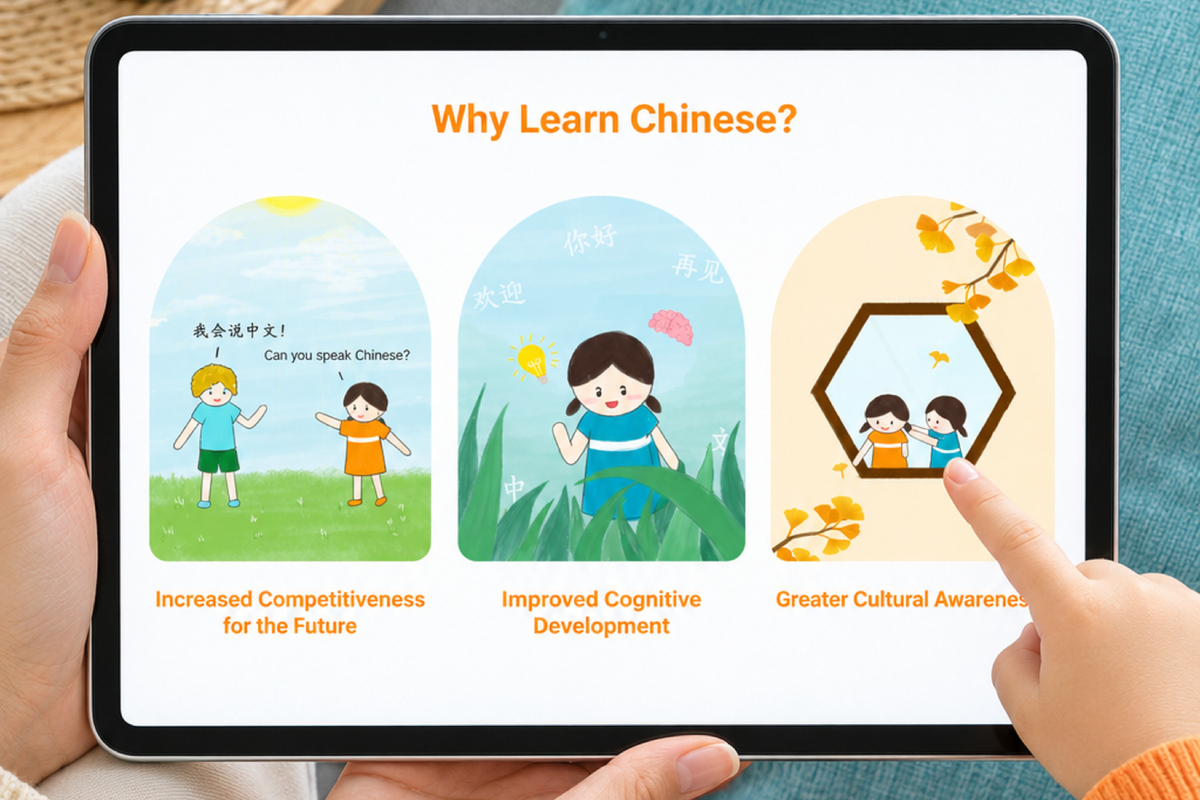
Yet Jennifer’s original motivation remains relevant to every part of the experience. For her, language learning has always been closely connected to culture. Learning Chinese should introduce children to the people, traditions, celebrations, and everyday experiences associated with the language, helping them understand the world beyond their own immediate surroundings.
It is a perspective that resonates strongly with international school communities.
Across Asia, classrooms bring together children from a remarkable variety of linguistic and cultural backgrounds. Some arrive speaking several languages at home; others are learning in English while maintaining their family’s mother tongue. Many parents hope their children will develop the confidence to move between cultures without losing their connection to where they come from.
For these families, language education is about much more than examinations or future employment prospects.
There is a genuine emotional value in hearing a child speak confidently to a grandparent, recognising the meaning behind a family celebration or feeling comfortable using a language that forms part of their identity.
Equally, for children learning Chinese as an additional language, the experience offers opportunities to understand another culture and develop new ways of communicating. A successful introduction can change a child’s perception of what once seemed unfamiliar or difficult.
There is no single solution for every learner. Children respond differently to teaching styles, and the quality of the relationship between teacher and student remains central. Digital programmes must also demonstrate that engagement translates into genuine learning rather than simply time spent completing activities. These are important considerations for any school evaluating new educational technology.
Jennifer’s approach is interesting because it brings those conversations together. Her work sits at the intersection of parental expectations, academic research, classroom practice and technology, drawing on the perspectives of people who do not always approach education from the same starting point.
Growing Globally, Staying Close to Home
The growth of hihilulu has taken her beyond the original family challenge into an international network of schools, teachers and education partners. Its programmes now reach learners in multiple countries, and Jennifer continues to explore how the approach might be adapted for different markets and school communities.
Southeast Asia is among the regions she is considering, with local partnerships an important part of understanding how hihilulu could develop there. Jennifer is also interested in strengthening relationships with international school organisations, building on connections such as those established with the Council of British International Schools (COBIS).
Her invitation to speak at a TEDx event in Korea in December 2026 offers another opportunity to share her perspective on education and the experiences that have shaped her work.
As a member of the Education Asia Advisory Board, Jennifer brings a particularly valuable combination of perspectives: that of a mother, an entrepreneur and someone who has spent years working alongside specialists in language education. Her experience offers an insight into the questions parents are asking and the opportunities that can emerge when educational expertise meets a problem encountered in everyday family life.
Perhaps the most compelling part of her journey is how little the original question has changed.
Jennifer wanted her children to feel comfortable speaking Chinese, to understand their heritage and to enjoy the process of learning. hihilulu has since developed into a much wider venture, but those early concerns still speak to families across the world.
For parents, the hope is that children will grow up able to communicate with confidence and feel at home in more than one culture. For educators, the challenge is to give them the knowledge, encouragement and opportunities to make that possible.
And sometimes, the most interesting ideas in education begin not with a new technology or a grand plan, but with a parent looking at her own children and wondering whether there might be a better way.