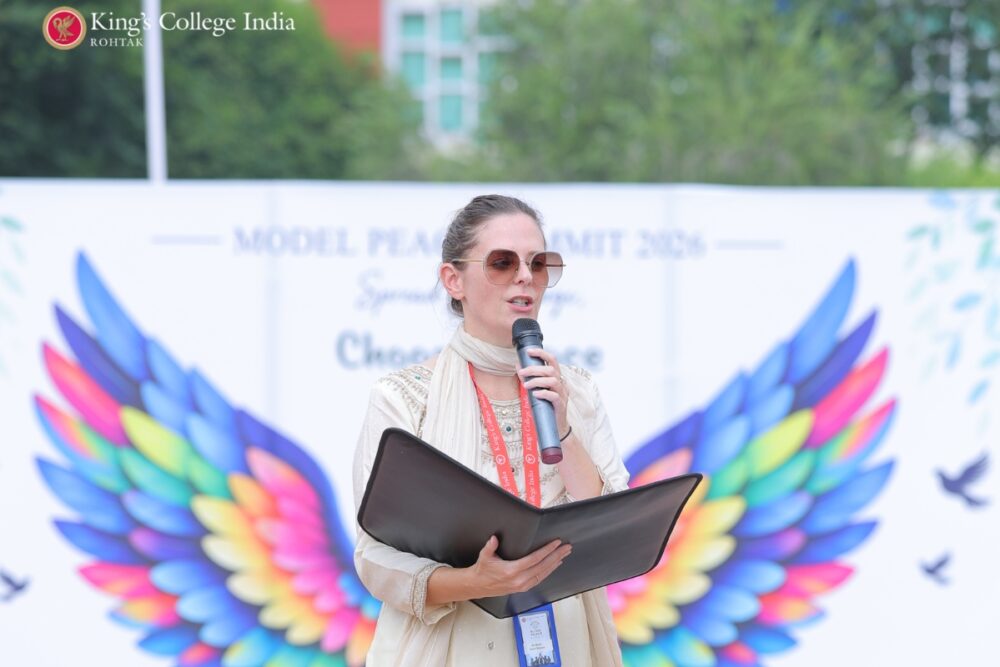
By Helen Caroline Bowen, Head of School, Kings College, India
The idea for the Model Peace Summit was born from the story of Sadako Sasaki, the young Hiroshima victim who became a symbol of hope and peace. After becoming seriously ill as a result of the atomic bombing, Sadako began folding paper cranes, inspired by the Japanese belief that making 1,000 cranes could bring a wish for healing and peace. Her story stayed with Helen Bowen, Head of King’s College India, and led to a simple question, What if young people from around the world could come together not simply to talk about peace, but to learn the skills needed to build it?
Nelson Mandela said,
“If you want to make peace with your enemy, you have to work with your enemy. Then he becomes your partner.”
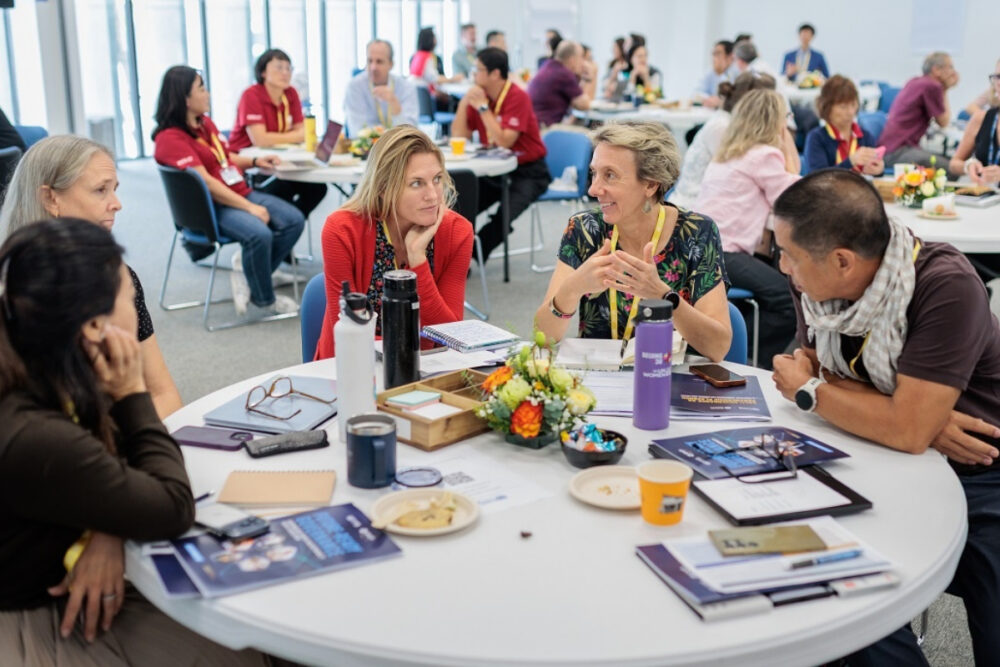
This became central to the thinking behind the inaugural Model Peace Summit. Students were brought together as one movement rather than as competing schools, exploring negotiation, empathy, emotional regulation, restorative justice and the complexities of conflict.
Making the Summit Possible
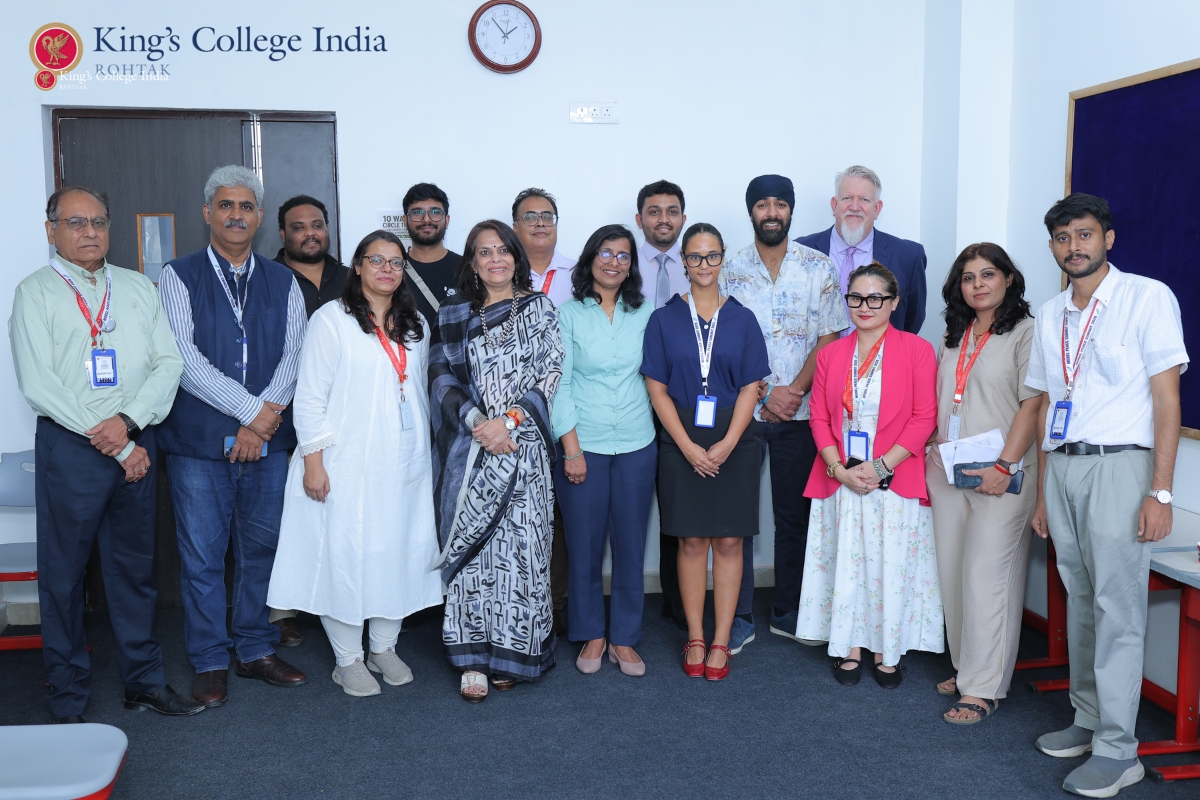
Months of preparation by students from King’s College India and IB Rohtak went into making the Summit possible. Students worked alongside staff to communicate with participating schools, coordinate guests and develop an ambitious programme. On Wednesday 23 September, the first visiting students arrived, with Shrewsbury International School India among the first to join us. Founding Head Dominic Tomalin had supported the vision from its earliest stages and, alongside Deniece Wheeler from COBIS and Amit Singh Kalley from For Working Parents, became one of the Peace Ambassadors working with Helen Bowen.
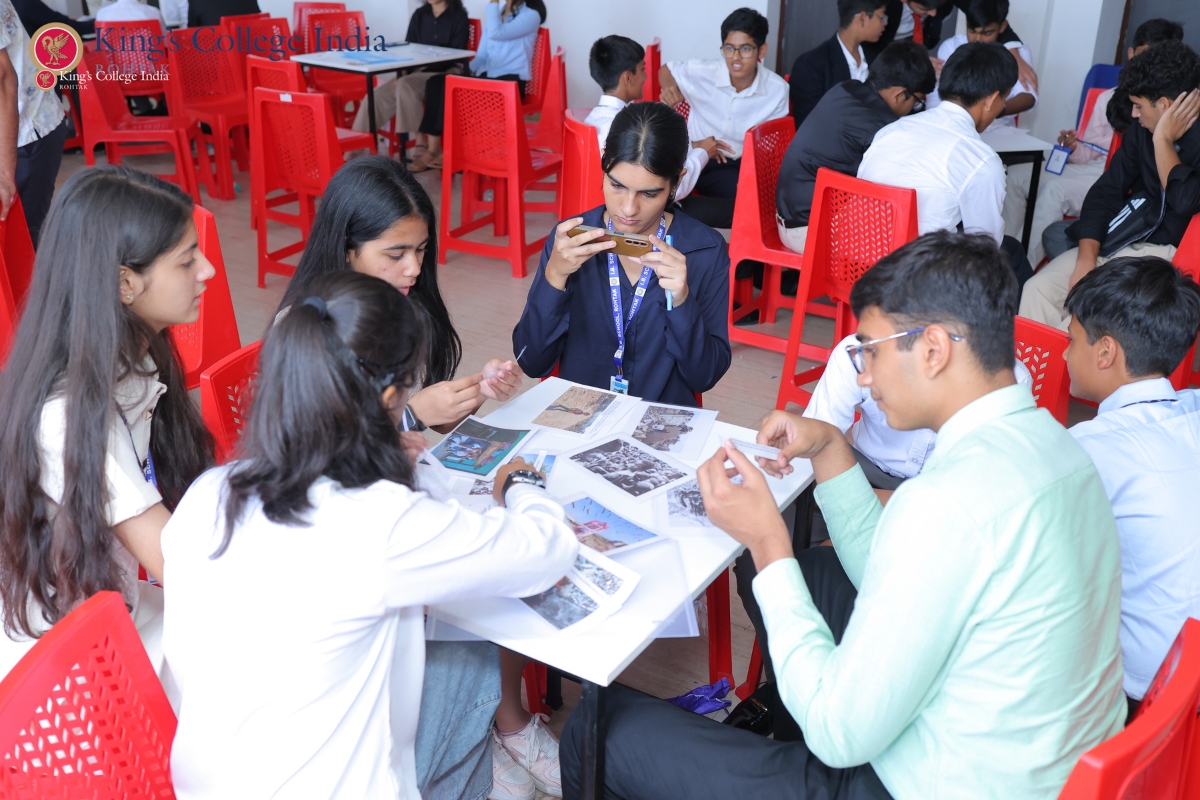
The Summit opened on Thursday with a student-led ceremony, including a joyful multilingual welcome from primary students and performances from students and parents. The learning then began in earnest, with students moving between Moot Court, Peace Building Councils modelled on UN processes and restorative justice. Dr Binu explored inner peace, wellbeing and mindfulness, while Devish challenged students to understand conflict before attempting to resolve it. The day ended with yoga, dance, meditation and gardening.
The learning then began in earnest, with students moving between Moot Court, Peace Building Councils modelled on UN processes and restorative justice.
Friday began with Theatre in Conflict, allowing students to explore difficult situations through storytelling and performance. They then considered the role of AI in a world experiencing conflict, before Rob Syfret from UNMAS helped them understand the aftermath of war and landmines. Further sessions explored the impact of conflict on ecology, while Tangi from HumAHive in Kenya joined online to answer students’ questions about life as a refugee. The day ended with a Heavy Metal concert featuring students and D2O, who travelled from Delhi especially to support the Summit.
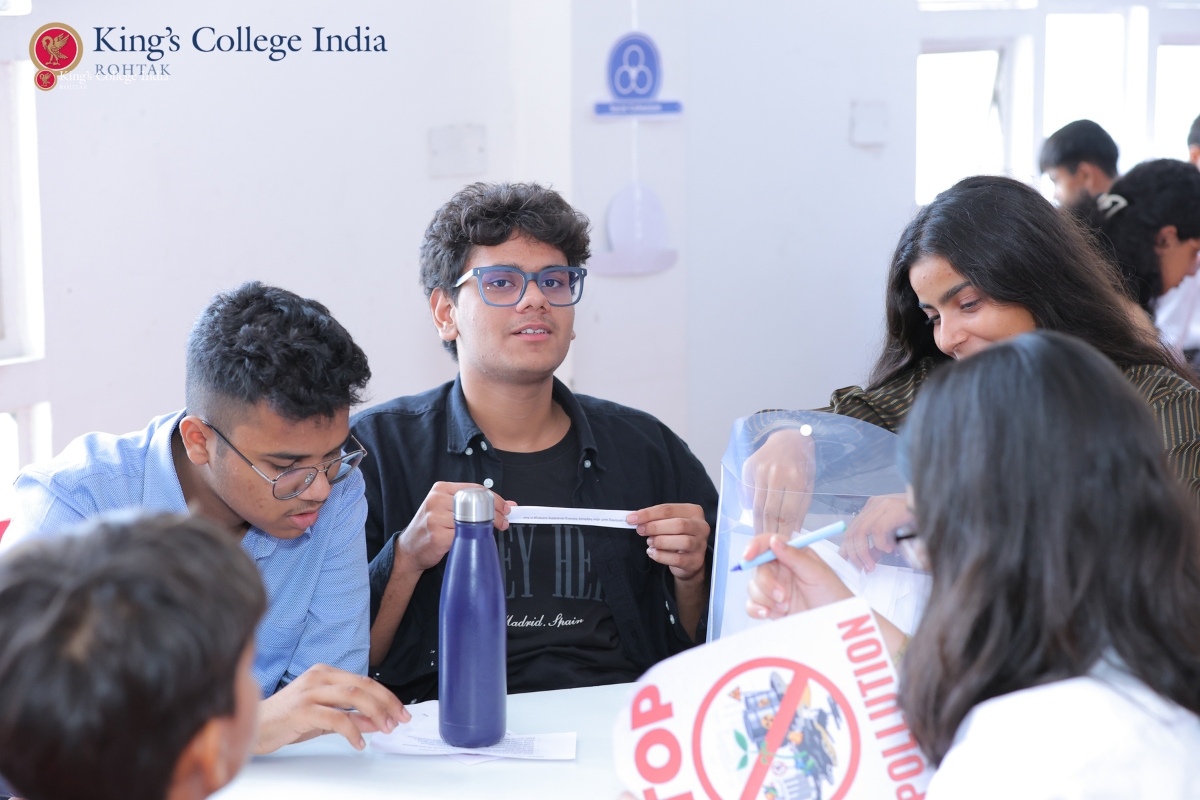
The final day brought everything together. Students created their own Peace Pledge, making a personal commitment to carry the learning beyond the Summit. The Peace Ambassadors performed Lemn Sissay MBE’s Let There Be Peace, followed by a closing address from Rishi Jalan, Founder and CEO of Big Red Education and a former Mayo College student who went on to study International Relations at Cornell University.
Legacy of the Learning
The Summit may have ended, but the work cannot. Its success lies not simply in three days of activities, but in what students choose to do with what they have learned. Shrewsbury International School India has already confirmed that it will host the next Model Peace Summit, and the hope is that more schools around the world will join the movement.
From Sadako’s cranes to the students’ Peace Pledge, the message is simple: peace is not something we simply talk about. It is something we learn to build, together.